

Last updated October 31, 2026
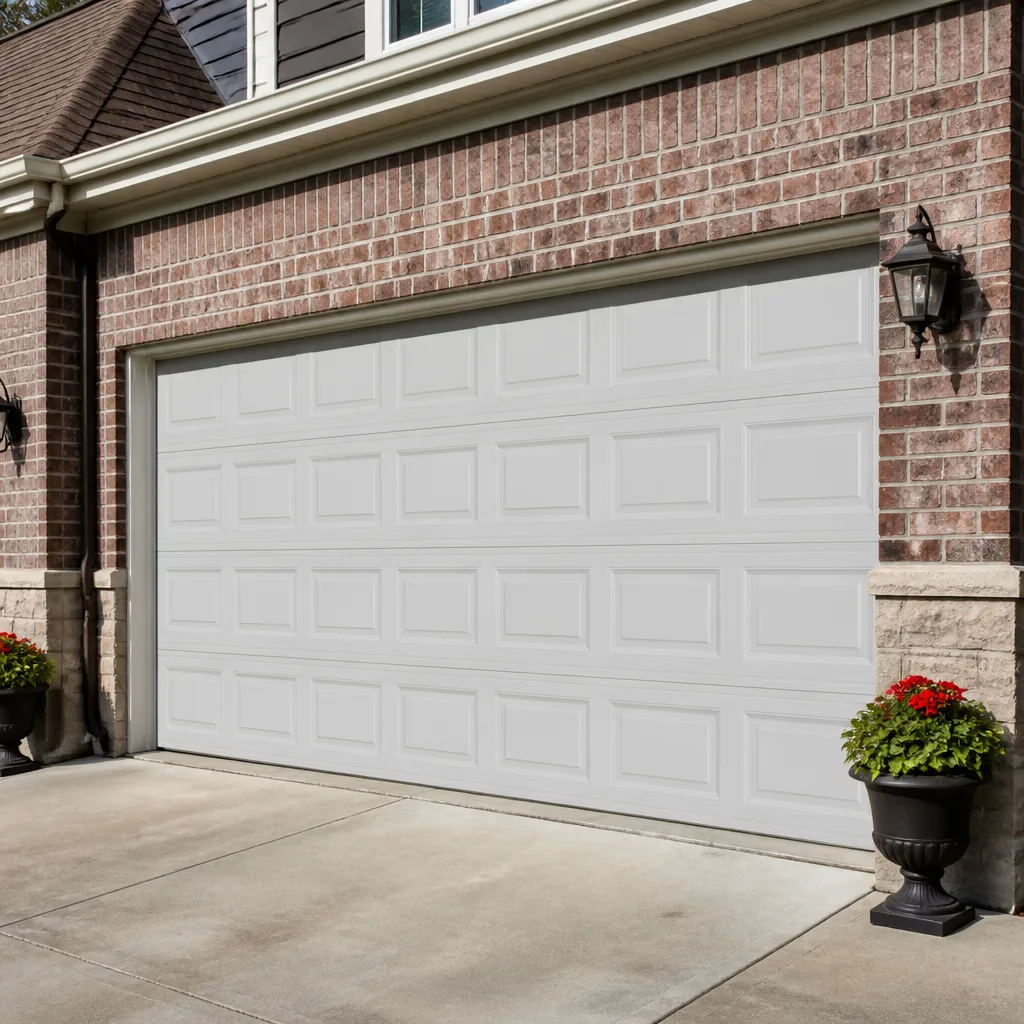 Raised-panel steel
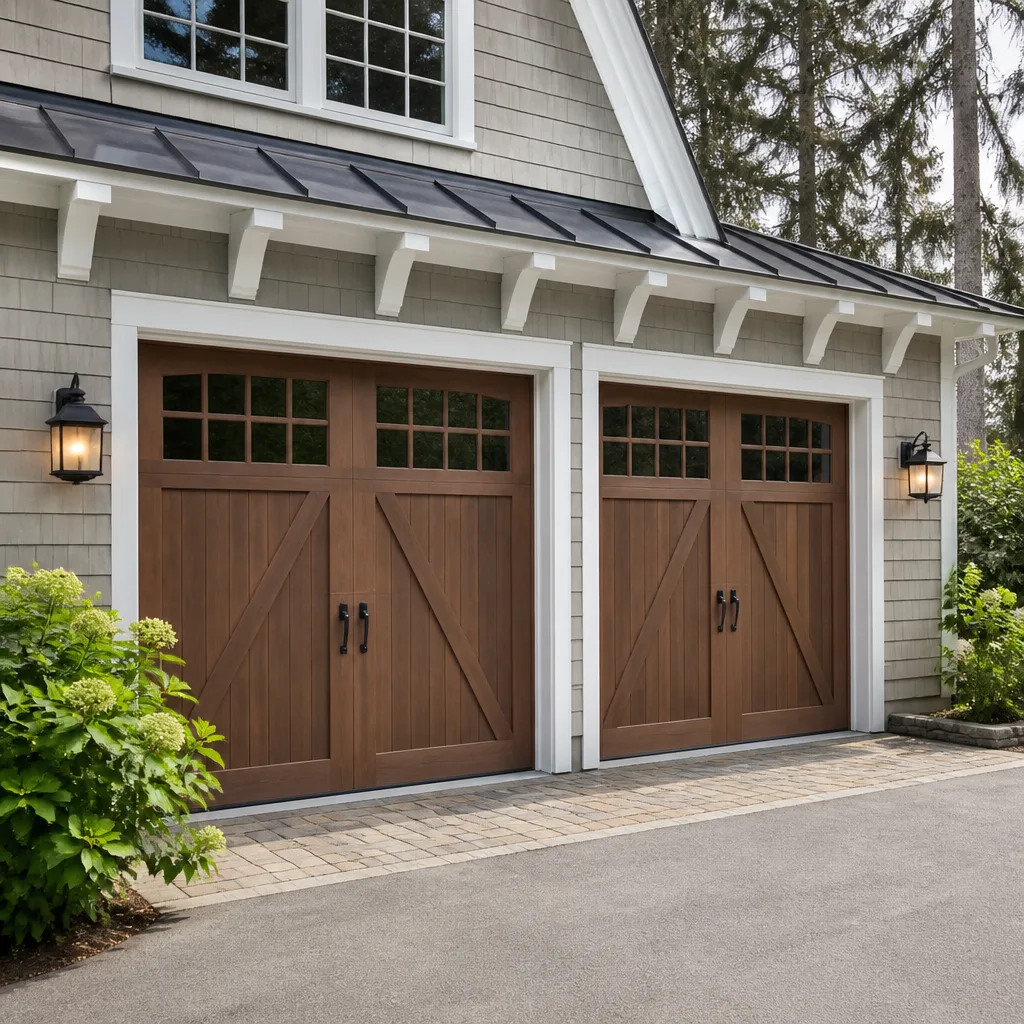 Carriage house
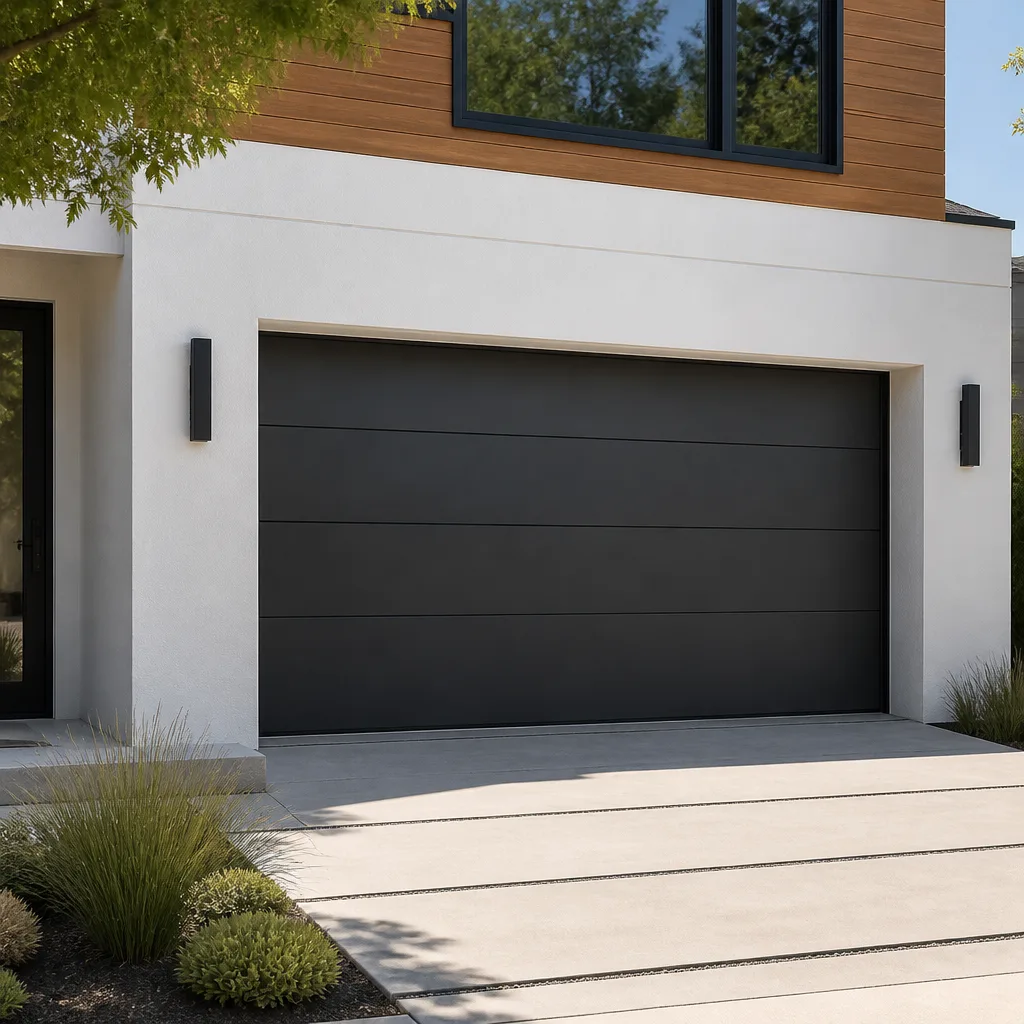 Modern flush
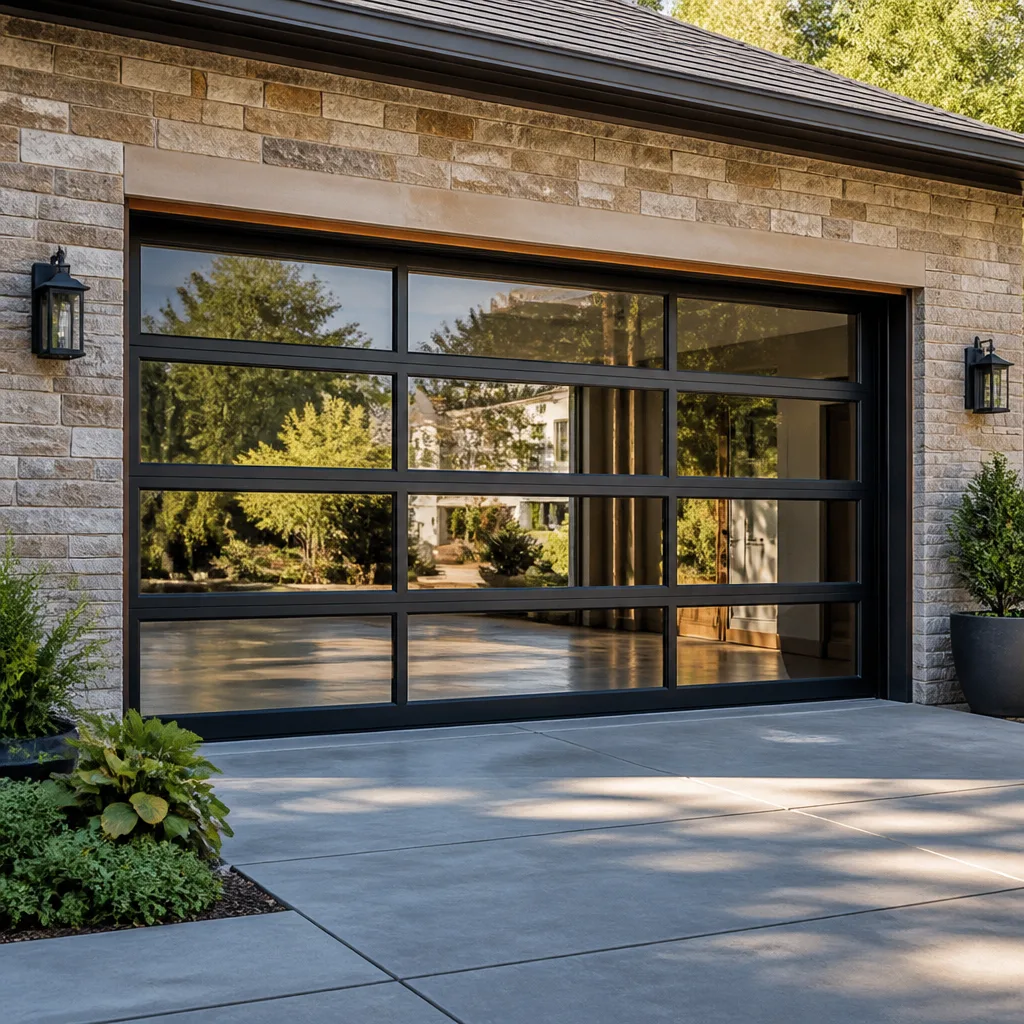 Full-view glass
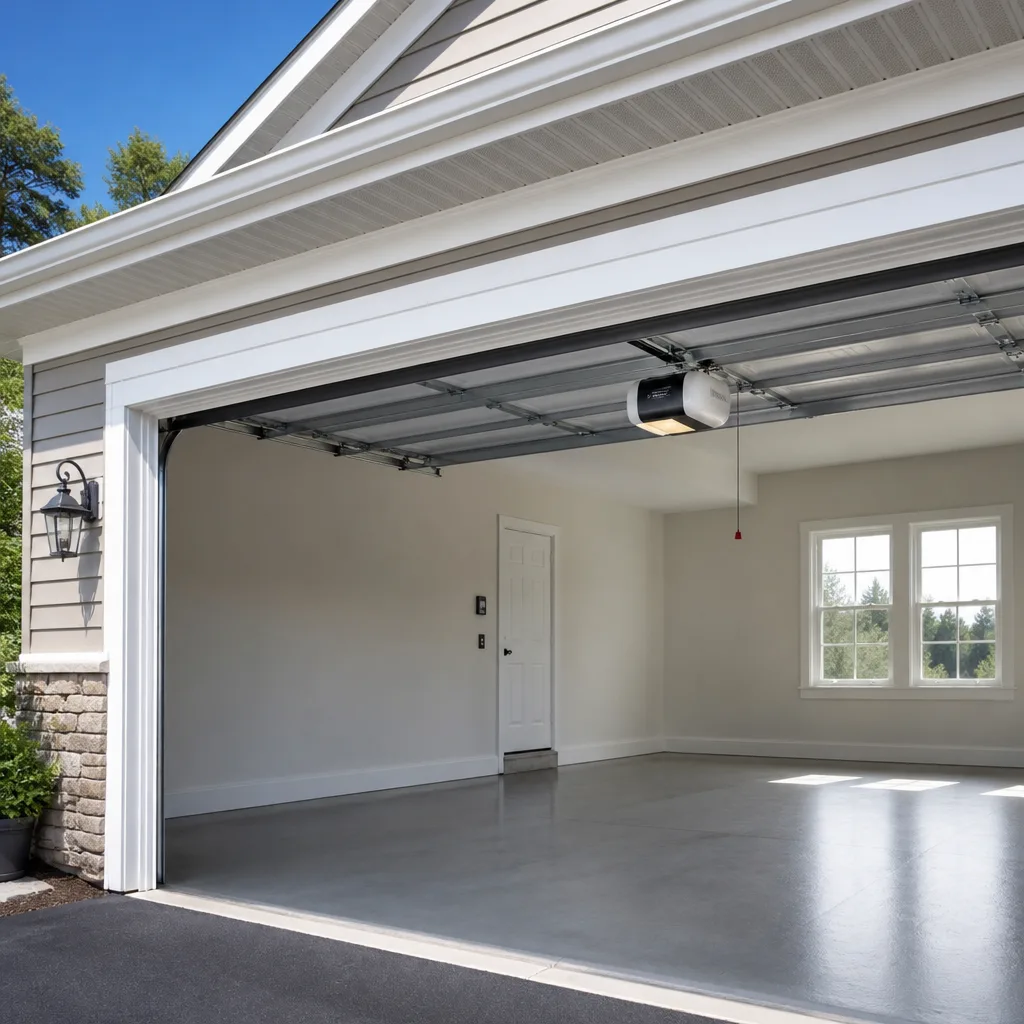 LiftMaster openers
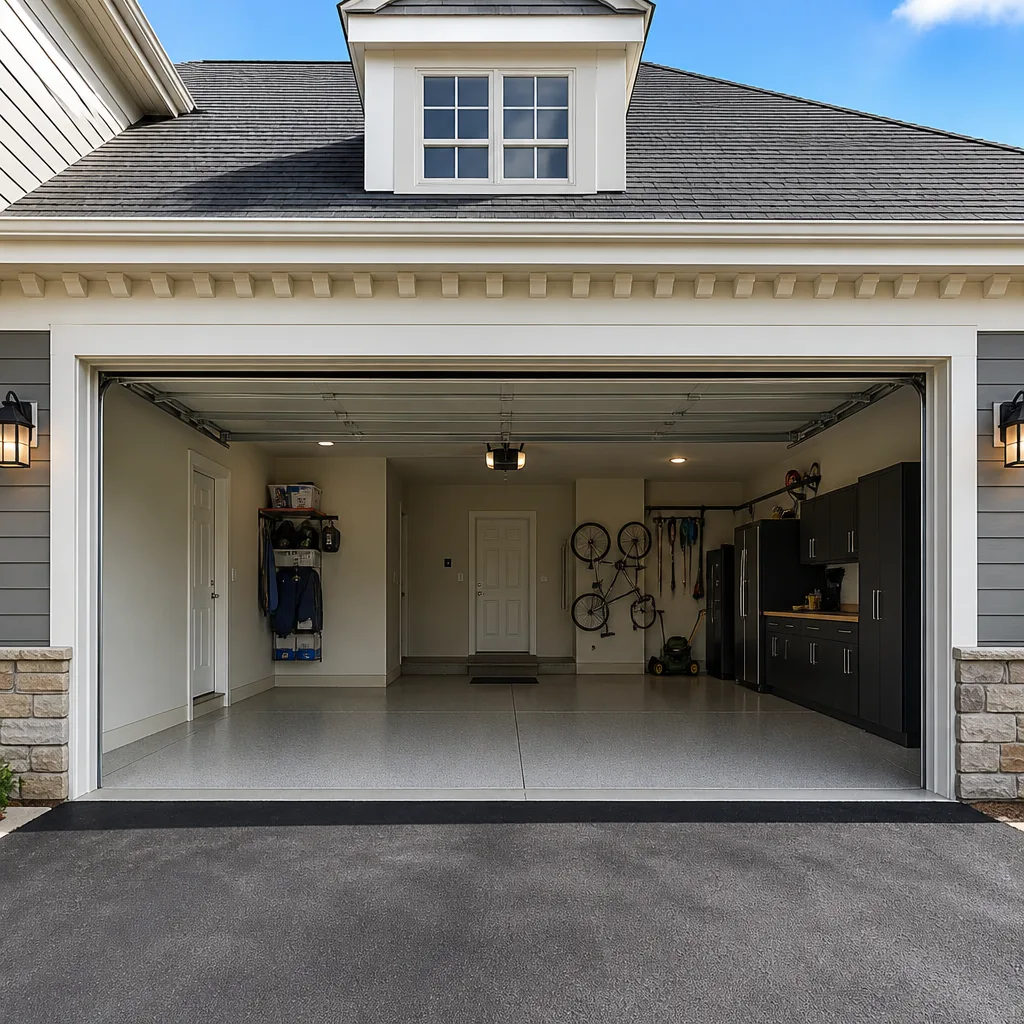 Chamberlain openers
Full 25-point door and opener safety check with every visit - springs, cables, rollers, tracks, and your LiftMaster or Chamberlain opener included
You get a price before we start. It does not change when the truck arrives.
Get your free estimateHow to Hire a Garage Door Contractor in Tampa: A Step-by-Step Guide
After a named storm tracks through Hillsborough County, the number of advertised garage door companies in Tampa doubles overnight. Many are gone by the following spring, leaving homeowners with voided warranties and no recourse when a spring snaps or a panel buckles. This guide is written to fix that problem. You’ll learn how to verify a Florida contractor’s license in under three minutes, which five questions separate multi-brand specialists from single-line dealers, what a legitimate written estimate must include under Florida law, and how to read reviews for signals of real craft rather than scripted responses. This is the vetting process we wish every Tampa homeowner had before they picked up the phone.
Quick Answer
Hiring a garage door contractor in Tampa comes down to verifying a Florida DBPR license, confirming brand-specific training on your door and opener, getting a written estimate that itemizes parts and labor separately, and reading reviews for evidence of diagnostic skill rather than polite customer service. Skip any contractor who quotes over the phone without asking about your door’s brand, age, or symptoms. A legitimate Tampa garage door professional will want to see the system in person before committing to a price.
Styles & brands we work with
Table of Contents
- Step 1: Verify the Florida Contractor License (DBPR Check in Under 3 Minutes)
- Step 2: The Five Questions That Separate Multi-Brand Specialists from Single-Line Dealers
- Step 3: What a Legitimate Tampa Written Estimate Must Include Under Florida Law
- Step 4: Six Red Flags in a Florida Garage Door Contract
- Step 5: How to Read Online Reviews for Garage Door Contractors
- Step 6: Hurricane Hardware, Wind Load, and Tampa-Specific Code Considerations
- Step 7: The Full Question List to Use Before You Hire
- Common Mistakes to Avoid
Step 1: Verify the Florida Contractor License (DBPR Check in Under 3 Minutes)
Florida is one of the strictest states in the country for contractor licensing, and Tampa sits inside a regulatory framework that gives homeowners real leverage if they use it. The Florida Department of Business and Professional Regulation (DBPR) maintains a public license lookup at myfloridalicense.com. You can search by company name, individual name, or license number. The search itself takes less time than ordering a coffee.
Here’s what to check, in order:
- License status: Look for “Active.” A license marked “Delinquent,” “Inactive,” or “Suspended” is a hard stop. In Tampa, we’ve seen homeowners hire contractors whose licenses lapsed the previous year and then found they had no standing to file a complaint with the DBPR when the work failed.
- License class: Garage door installation and repair in Florida falls under a specialty contractor classification. You’ll typically see a “Specialty Structure” or a specific garage door category. General contractors can legally perform the work, but a specialty classification signals that garage doors are the contractor’s primary trade, not a side offering.
- Workers’ compensation and liability insurance: The DBPR record shows whether the contractor carries workers’ comp. Ask for a certificate of liability insurance separately. In Tampa’s busy season, uninsured crews are common, and if a worker gets hurt on your property, the claim can land on your homeowner’s policy.
- Complaint history: The DBPR records complaints and their outcomes. One old complaint with a resolved disposition is not a dealbreaker. Multiple complaints citing the same issue suggest a pattern.
This step exists because Florida law puts real teeth behind licensed contractors: the DBPR can pursue restitution, revoke licenses, and fine operators. Hiring an unlicensed handyman for a garage door repair in Tampa means forfeiting all of that protection. The state’s Construction Industry Licensing Board exists specifically to handle disputes like this, but only if the contractor was licensed to begin with.
A practical note: Florida law requires contractors to include their license number on all advertisements, vehicles, and written contracts. If a Tampa garage door company’s truck, website, or estimate does not show a license number, treat that as the first red flag. It is a violation of Florida Statute 489.119, and it tells you how seriously they take the rules.
Step 2: The Five Questions That Separate Multi-Brand Specialists from Single-Line Dealers
Most garage door companies in Tampa fall into one of two camps. The first camp sells and services one or two brands exclusively. The second camp is trained across multiple manufacturers and can diagnose whatever system is already installed on your home. The second camp is what you want, and these five questions expose the difference quickly.
- “What brand is my current opener?” A multi-brand technician will ask you. A single-line dealer will tell you what they sell. In our experience, the contractor who leads with your existing equipment before mentioning their inventory is the one who diagnoses rather than upsells.
- “If my opener is beyond repair, do you install more than one brand of replacement?” If the answer names a single manufacturer, you’re talking to a dealer, not a diagnostician. They will recommend that brand regardless of your needs. A specialist trained on LiftMaster, Chamberlain, and Genie openers can match a replacement to your door’s weight, your ceiling clearance, and how you actually use the garage.
- “Have you worked on a door and opener from different manufacturers on the same system?” It is extremely common in Tampa for an older Clopay or Amarr door to be paired with a Genie or Craftsman opener. Multi-brand technicians see this daily. Single-line dealers often struggle with cross-brand compatibility and may recommend replacing both when only one needs work.
- “What training do your technicians carry for the specific brand on my home?” Look for concrete answers: factory training, ongoing certification, years of hands-on work with that manufacturer. Vague answers indicate generalist handyman experience, not door-specific craft.
- “When you diagnose an opener problem, do you repair the board or replace it?” This question reveals depth. A knowledgeable technician knows which LiftMaster and Chamberlain logic boards can be reflashed or repaired and which must be replaced. A parts swapper replaces everything. The right fix, not the easy fix.
At Vintage Garage Door Service, we’re trained and experienced on eight of the most widely installed garage door and opener brands in North America: LiftMaster, Chamberlain, Genie, Clopay, Amarr, Wayne Dalton, Craftsman, and Raynor. That breadth matters because Tampa’s housing stock spans everything from 1950s bungalows in Seminole Heights to new construction in New Tampa, and every era brought different hardware with it.
Step 3: What a Legitimate Tampa Written Estimate Must Include Under Florida Law
Florida does not allow a garage door contractor to perform work without a written contract, and a legitimate written estimate in Tampa should include specific line items. If an estimate looks like a single number scrawled on a business card, walk away. Here is what a proper estimate contains.
- Contractor name, license number, and physical address: Not a P.O. box. Florida law requires the license number on the estimate. A physical address tells you the company is established in the area, not a storm-chaser working out of a pickup truck and a burner phone.
- Itemized parts and labor: The parts line should name the manufacturer and part number or specification. “Spring replacement” is vague. “Pair of torsion springs, .207 x 2 x 25, 30k cycle rating” is an estimate written by someone who measured your door. The labor line should be separate. A combined line makes it impossible to compare bids or question a parts substitution later.
- Warranty terms on both parts and labor: The parts manufacturer typically provides a warranty of one to five years depending on the component. The contractor’s labor warranty is separate. A written estimate should state both durations explicitly. In Tampa’s humid climate, rust and corrosion on hardware are common, so confirm whether the warranty covers corrosion-related failures or excludes them.
- Scope of work in plain language: What exactly will be done, what will be removed, what will be installed, and what will be left behind. “Replace spring assembly” should specify whether the quote includes new cables, new drums, and new bearings, or just the springs themselves. These line items are where padding hides.
- Total price and payment schedule: Florida law prohibits a contractor from demanding more than 10% down or $1,000, whichever is less, for residential work before the job begins, with limited exceptions. Any contractor asking for 50% upfront on a garage door job in Tampa is either ignorant of the law or testing you.
- Permit status: Some Tampa garage door work requires a permit. The estimate should state who pulls the permit, if one is needed, and whether the permit fee is included in the total.
The price is quoted and agreed before any work starts. That is non-negotiable. When the technician arrives, the written estimate is the ceiling, not the floor. Legitimate change orders happen when hidden damage is discovered, but they must be written and approved before additional work begins. If a contractor informs you halfway through a spring replacement that the cables also need replacing for double the original quote, pause the job and get it in writing.
Step 4: Six Red Flags in a Florida Garage Door Contract
Florida law gives homeowners specific protections, and bad contractors have developed specific workarounds. These are the contract clauses and estimate patterns we tell Tampa homeowners to watch for.
- The “estimate” is verbal: Florida law requires a written contract for residential work over a small dollar threshold. A verbal agreement gives you nothing to enforce. No written estimate, no work.
- The license number is for a different trade: Some contractors hold a general contractor license but have no specialty garage door classification or meaningful door experience. Check the DBPR record for complaint patterns specific to door work.
- Vague parts descriptions: “Commercial-grade springs” without a size, cycle rating, or manufacturer is a placeholder for whatever parts are cheapest on the supply run. In Tampa’s heat, cheap springs fatigue fast. You’ll be paying for the same repair again within two years.
- No warranty on labor: If the contractor will not stand behind their installation for at least one year, the quality of their workmanship matches that confidence level.
- Pressure to skip the permit: Some Tampa contractors will tell you a permit is unnecessary to save time. Most garage door replacements and some opener installations require a permit in Hillsborough County. If your contractor wants to skip it, they’re transferring risk onto you. Unpermitted work can complicate a future home sale and can void portions of your homeowner’s insurance.
- One-line quotes over the phone: A contractor who quotes $249 for a spring replacement without knowing your door’s weight, spring type, or cycle rating is guessing. Or baiting. Either way, the real invoice comes later.
Step 5: How to Read Online Reviews for Garage Door Contractors
Reading reviews for a garage door contractor in Tampa requires a different filter than reading restaurant reviews. Most homeowners write reviews based on two things: whether the technician was polite and whether the door opens. Neither tells you whether the work was done correctly. Here is how to separate signal from noise.
Phrases that indicate real craft:
- “Diagnosed the problem in under an hour” or specific diagnostic language like “found the spring was the wrong size from a previous repair.” These suggest a technician who solves problems, not one who swaps parts until something sticks.
- “Explained the options and recommended the cheaper fix.” Technical honesty in a review is a strong signal. A contractor who tells a customer the board can be repaired when a competitor said it needed replacement is a contractor you want.
- “Worked on my [specific brand] door.” Reviews that name the specific brand of door or opener on the home tell you the reviewer paid attention and the technician did too. Reviews that say “fixed my garage door” with no detail could be about any company.
- “Showed me the worn part” or “walked me through what was wrong.” A craftsman shows their work. These reviews indicate a technician who wants the customer to understand the repair.
Phrases that indicate scripted or generic service:
- “Friendly and professional” appears in nearly every positive review regardless of trade. It is useful, but it tells you nothing about the quality of the door repair.
- Reviews that repeat the company’s marketing language verbatim. If three reviews say “one-stop shop for all garage door needs,” the company likely prompted that language.
- Long review threads with generic responses from the company: “Thanks for the 5 stars, [Name]!” means the owner is farming reviews, not reading them. A company owner who writes a specific response to a specific complaint is the better signal.
Look at the negative reviews first. Every garage door company in Tampa has them. What matters is the company’s response and the pattern. A negative review saying “they replaced the spring but charged more than the quote” followed by a company response that explains the change order and demonstrates a written record is fine. Five negative reviews all citing the same problem over three years is a pattern.
Also check the review dates. A company with 100 reviews built over eight years tells a different story than a company with 100 reviews in three months, which often indicates a review-buying operation or a post-storm marketing push. In Tampa’s post-hurricane season especially, watch for review bursts that seem too good.
Step 6: Hurricane Hardware, Wind Load, and Tampa-Specific Code Considerations
Tampa sits in a high-velocity hurricane zone, and the Florida Building Code has specific requirements for garage doors that many homeowners never hear about. This is the section most hiring guides gloss over, and it matters more in Hillsborough County than almost anywhere else in the country.
Garage doors in Tampa must meet wind load requirements based on their location within the county. A door rated for a non-coastal ZIP code may not be compliant for a home in South Tampa or near the bay. The door’s wind load rating is printed on a label attached to the door panel or on the manufacturer’s spec sheet. A legitimate contractor will check this rating during an installation estimate, not after the work is done.
Storm panels and hurricane bracing are not decorative in Tampa. They are load-bearing systems that transfer wind pressure into the surrounding structure. If these are installed incorrectly, they create a false sense of security. After a major storm passes, the damage pattern tells the story: doors that flew off their tracks were often the same doors that had been “reinforced” by a contractor who did not understand the engineering.
What to ask a contractor about Tampa-specific code:
- “What wind load rating does my current door have, and what does my ZIP code require?”
- “Does this replacement door meet Florida Building Code for my location?”
- “If I need a permit, do you handle the paperwork?”
- “Are you installing storm reinforcement hardware, and is it rated for the same wind zone as the door?”
- “Will you provide the product approval documentation for the door and hardware?”
The lowest bid frequently means non-code-compliant hardware. A door rated for inland use costs less than a door rated for a coastal wind zone, and a contractor who quotes a Tampa job without checking the wind zone is either cutting corners or does not know the code. Neither is acceptable. The cost difference between a compliant and non-compliant door is real, and it is exactly where low bidders make their margin.
Step 7: The Full Question List to Use Before You Hire
Here is the complete question list to read from when you call a Tampa garage door contractor. Keep it by the phone. These questions matter for any job, from a garage door repair in Tampa to a full replacement.
- Licensing: “What is your Florida contractor license number, and what license class covers garage door work?” Write it down. Look it up at myfloridalicense.com while you’re on the call.
- Insurance: “Do you carry liability insurance and workers’ compensation? Can you email me the certificate?” A legitimate contractor will send it the same day.
- Brand training: “My opener is a [LiftMaster/Chamberlain/Genie/Craftsman]. What training do your technicians have on that system?” A specialist has trained on those brands. If you’re having an opener problem specifically, this matters more than any other question for a garage door opener repair in Tampa.
- Diagnostic process: “Can you diagnose my issue over the phone, or do you need to see the door?” The correct answer is almost always that they need to see it. Phone quotes for springs without a measurement are guesses.
- Written estimate: “Will I get a written estimate before any work starts, with parts and labor itemized separately?” The only acceptable answer is yes.
- Warranty: “What is the parts warranty and what is your labor warranty? Are both written on the estimate?”
- Permits: “Does this job require a permit in Hillsborough County, and if so, who pulls it?”
- Timeline: “When can you schedule the work, and how long will it take?” For a spring or cable repair, a couple of hours is typical. For a full garage door installation in Tampa, allow half a day.
- Cleanup: “Do you remove and dispose of the old parts and packaging?” A proper contractor leaves the garage cleaner than they found it.
- Payment: “What is the payment schedule, and does it comply with Florida’s 10% down limit for residential work?”
You do not need to ask all ten questions of every contractor. The first three will eliminate most of the bad options in Tampa within two minutes on the phone.
Common Mistakes to Avoid
- Hiring the first company that answers after a storm. After a hurricane or major storm hits Tampa, the highest-bidding, least-qualified crews are often the only ones with open phone lines. The good contractors are booked. Wait if you can; your door has a manual release for a reason.
- Asking “how much is a spring?” instead of “how much to replace my specific spring correctly?” A spring is not a commodity. The correct spring for a 16×7 door weighing 180 pounds is different from the correct spring for a 9×7 door weighing 120 pounds. A contractor who quotes a flat spring price without measuring is guessing.
- Replacing the opener when the door is the problem. A door with worn rollers, tired springs, or misaligned tracks will kill an opener’s motor prematurely. A good contractor checks the door before recommending an opener replacement. A bad one sells you another opener you’ll be replacing again in three years.
- Accepting a verbal quote for a large installation. For a new door in Tampa, a verbal quote is insufficient. You need written specifications, written warranty terms, and written permit responsibility. Verbal promises are unenforceable.
- Skipping the permit. Unpermitted garage door work in Hillsborough County can surface during a home sale and block closing until it’s resolved. The few hundred dollars a permit adds is cheap insurance.
- Assuming all garage door companies are licensed. Florida’s DBPR estimates thousands of unlicensed contractors work in the state every year. Hillsborough County is one of the busiest markets for unlicensed activity. The license lookup takes three minutes. Use it.
- Choosing the lowest bid without asking why it’s lower. In Tampa specifically, low bids often mean non-wind-rated hardware, no permit, or no warranty. Ask what the difference is. A good contractor can explain exactly why their price is higher in 60 seconds.
See the difference
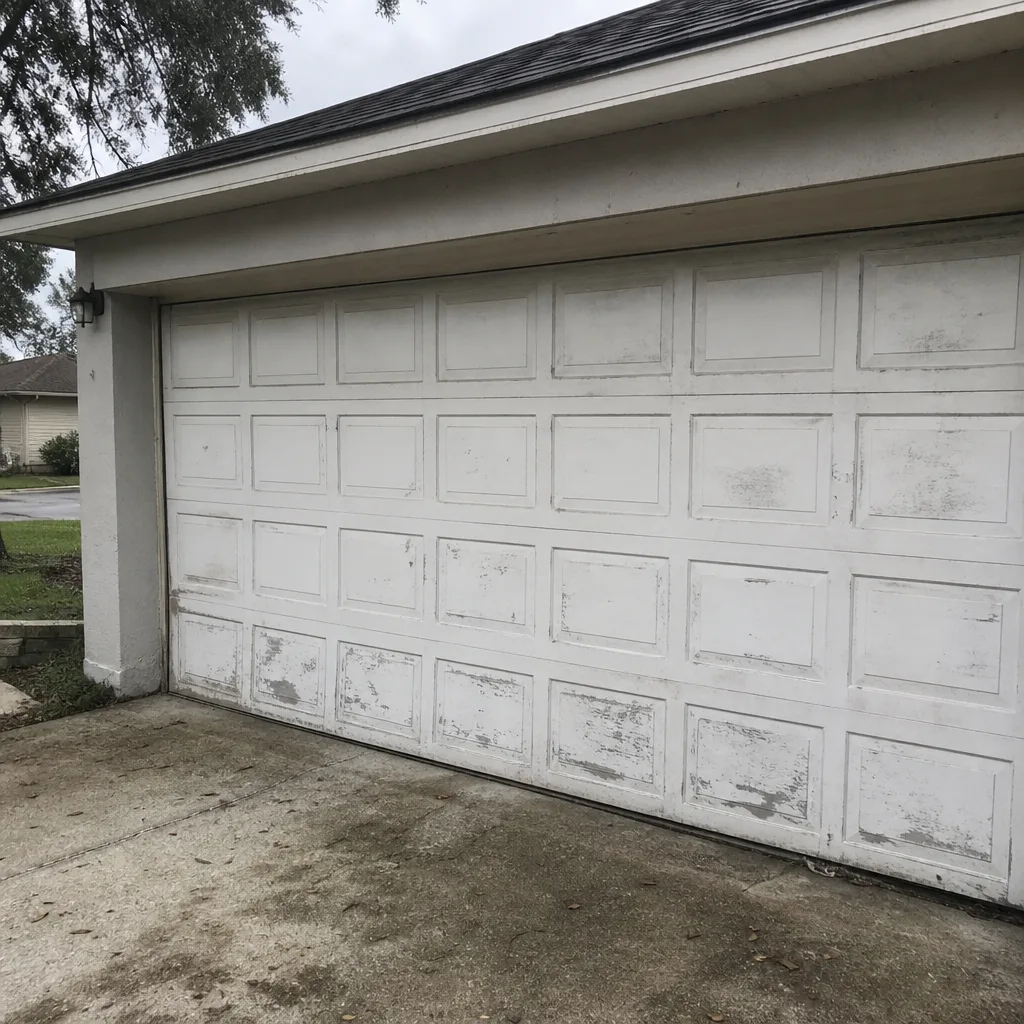 Before
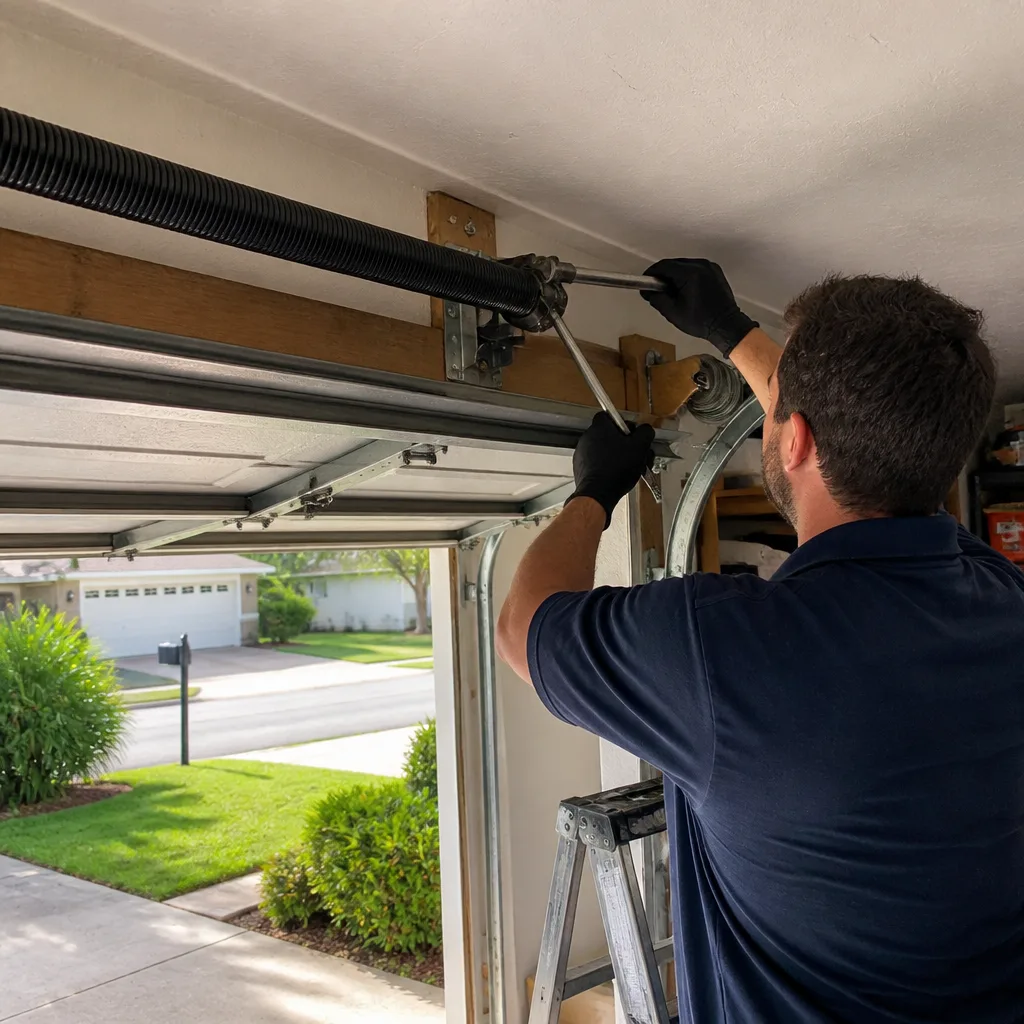 After
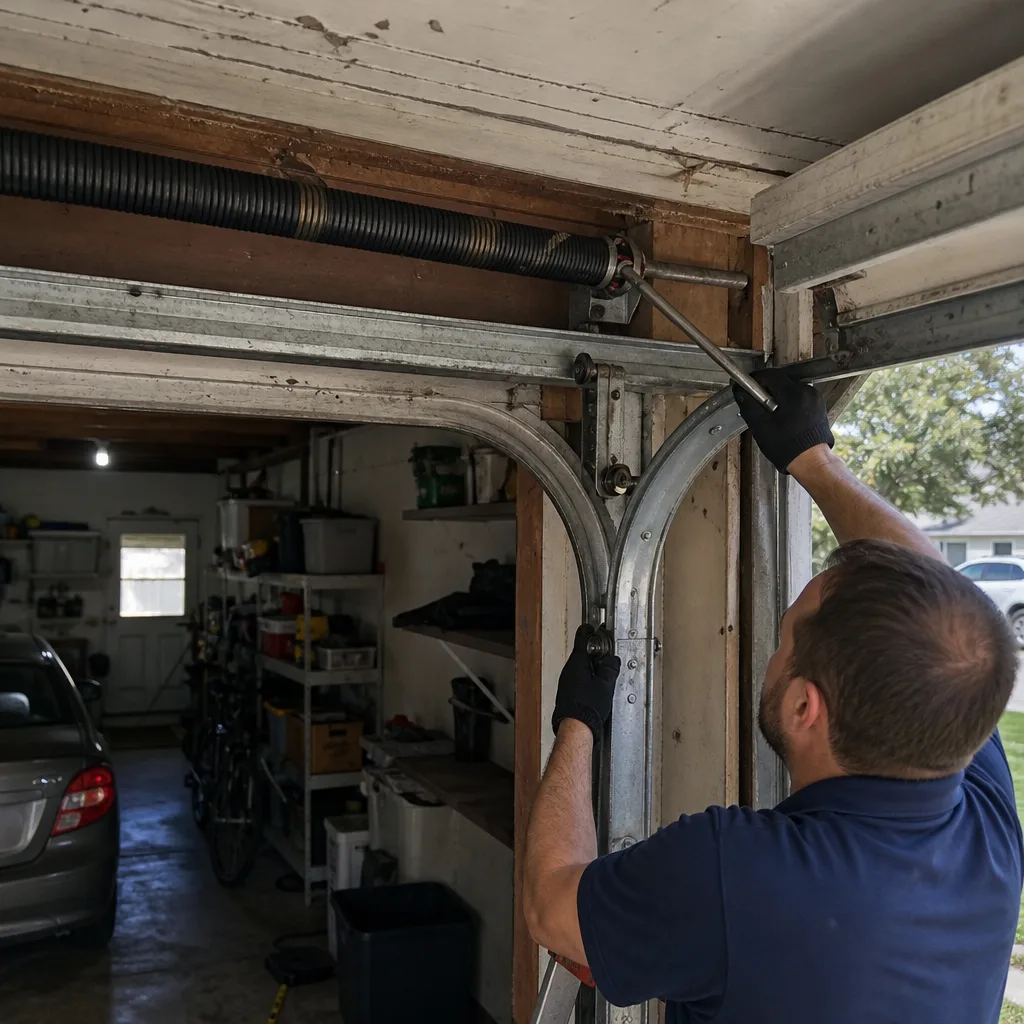 Before
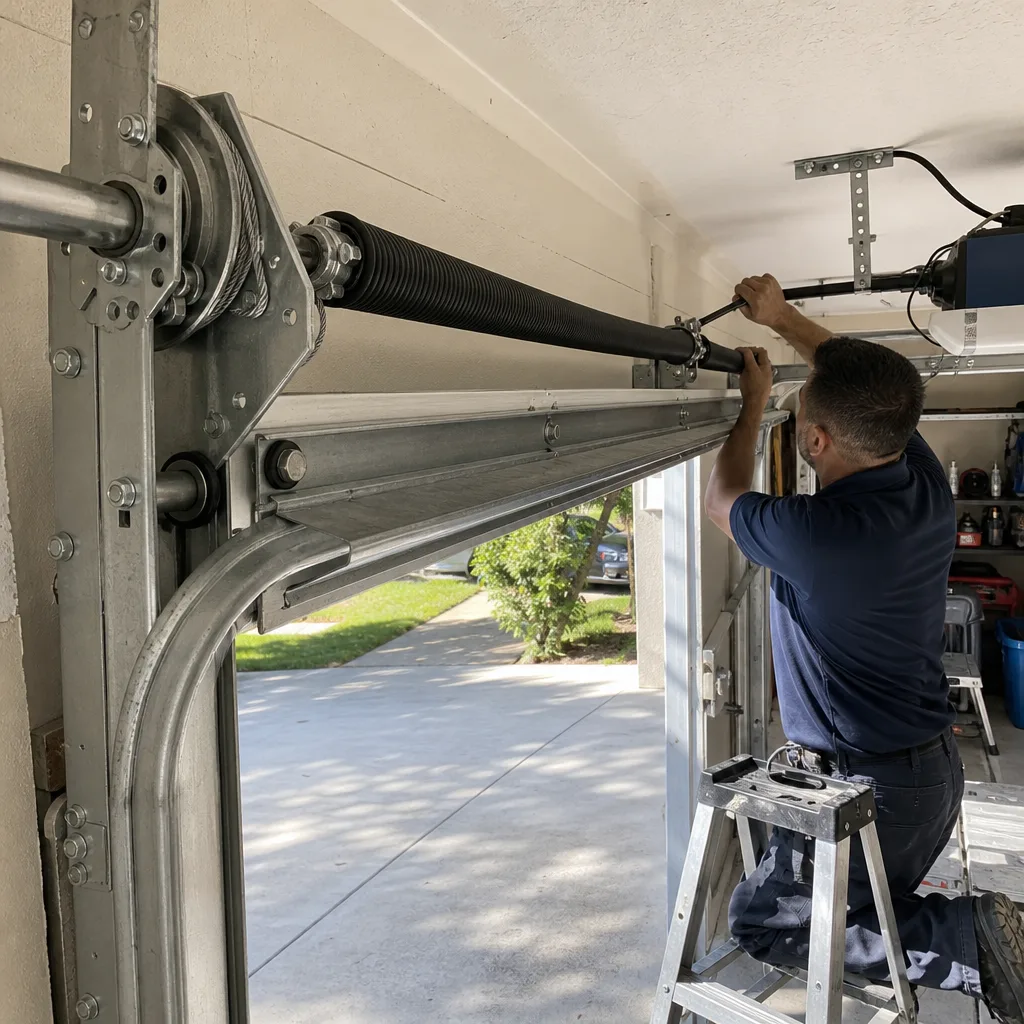 After
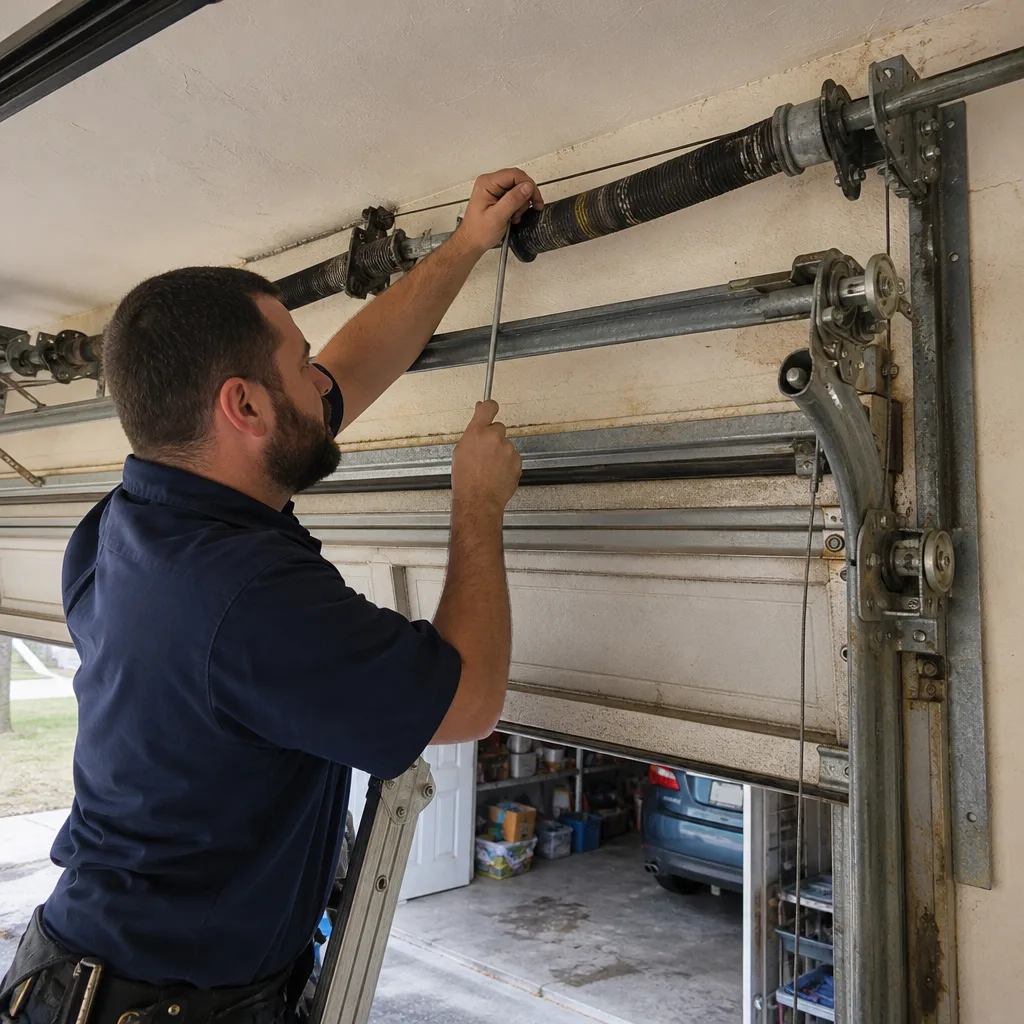 Before
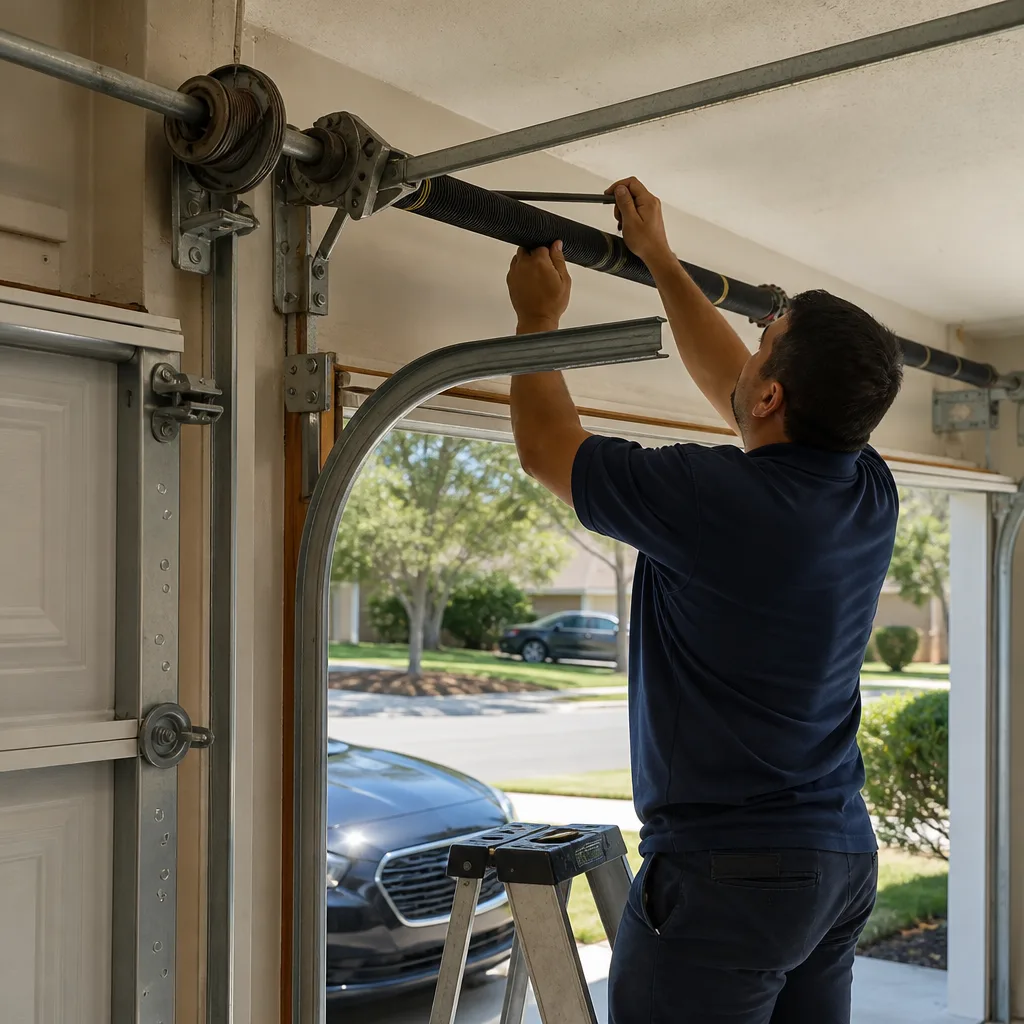 After
When to Call a Professional
Some garage door problems are obvious: the door is off its tracks, a cable has snapped, or the opener motor runs but the door doesn’t move. Those all warrant a professional call in Tampa, and quickly. Other situations are less obvious but just as urgent. If your door is making a grinding sound, if it closes unevenly, if the remote range drops unexpectedly, or if you notice fraying on a cable, the problem is developing and it will get worse. Garage door springs and cables operate under high tension and cause serious injury when they fail. Do not attempt to adjust torsion springs yourself. This is not a DIY task regardless of how many tutorials are online. The right person for this job has the right tools, the right training, and the right respect for the equipment. Vintage Garage Door Service offers free estimates in Tampa. Call (866) 253-5794 and we’ll send a technician who knows your brand. We know your brand. That is not a slogan; it is what we train on.
Frequently Asked Questions
A garage door spring replacement in Tampa typically costs between $180 and $340 for a pair of torsion springs, depending on the spring size, cycle rating, and whether cables and bearings are included. The price should be quoted and agreed upon in writing before any work begins. Call (866) 253-5794 for an exact quote. Estimates are free.
To verify a Florida garage door contractor license, go to myfloridalicense.com and search by company name or license number. The record shows license status, license class, complaint history, and workers’ compensation coverage. The entire search takes under three minutes and should be done before you hire anyone in Tampa.
Ask for the Florida DBPR license number, proof of workers’ comp and liability insurance, written estimates with itemized parts and labor, warranty terms in writing, and whether the job requires a permit in Hillsborough County. Also ask what specific brands the technician is trained on, especially if you have a LiftMaster, Chamberlain, Genie, or Craftsman opener.
In most cases, a garage door replacement in Tampa requires a permit through Hillsborough County or the City of Tampa. The permit confirms the new door meets Florida Building Code wind load requirements for your location. A legitimate contractor will handle the permit paperwork. If a contractor suggests skipping the permit, treat that as a red flag.
Yes, a multi-brand specialist can repair openers from LiftMaster, Chamberlain, Genie, Craftsman, Raynor, and other major manufacturers. The key is finding a contractor with training on your specific model rather than a dealer who only works on one brand. Multi-brand training means faster, more accurate diagnosis and a recommendation based on what is right for your door, not what is easiest to sell.
A legitimate contractor will provide a written estimate after seeing the door, and that written estimate should be the ceiling for the agreed scope of work. If hidden damage is discovered during the repair, a written change order must be approved by you before additional work starts. No legitimate Tampa garage door contractor changes the price without your written approval. Call (866) 253-5794 to get a clear written estimate before you commit.
The Bottom Line
Hiring a garage door contractor in Tampa is a process of elimination, not selection. Most of the work is saying no: no to unlicensed crews, no to verbal quotes, no to single-brand dealers, no to non-compliant hardware. Once you’ve eliminated those, the right contractor is the one who asks about your door’s brand before telling you what to buy, who writes a detailed estimate, who pulls the permit, and who stands behind both the parts and the labor. That is how you get a garage door built to last, fixed to last. For a complete guide to our services, visit the Vintage Garage Door Service home page, or explore our specific garage door repair, opener repair, and installation offerings in detail. When you’re ready for an estimate, call (866) 253-5794. One call, full system.
Written by the team at Vintage Garage Door Service, serving Tampa since 2012.