

Last updated October 31, 2026
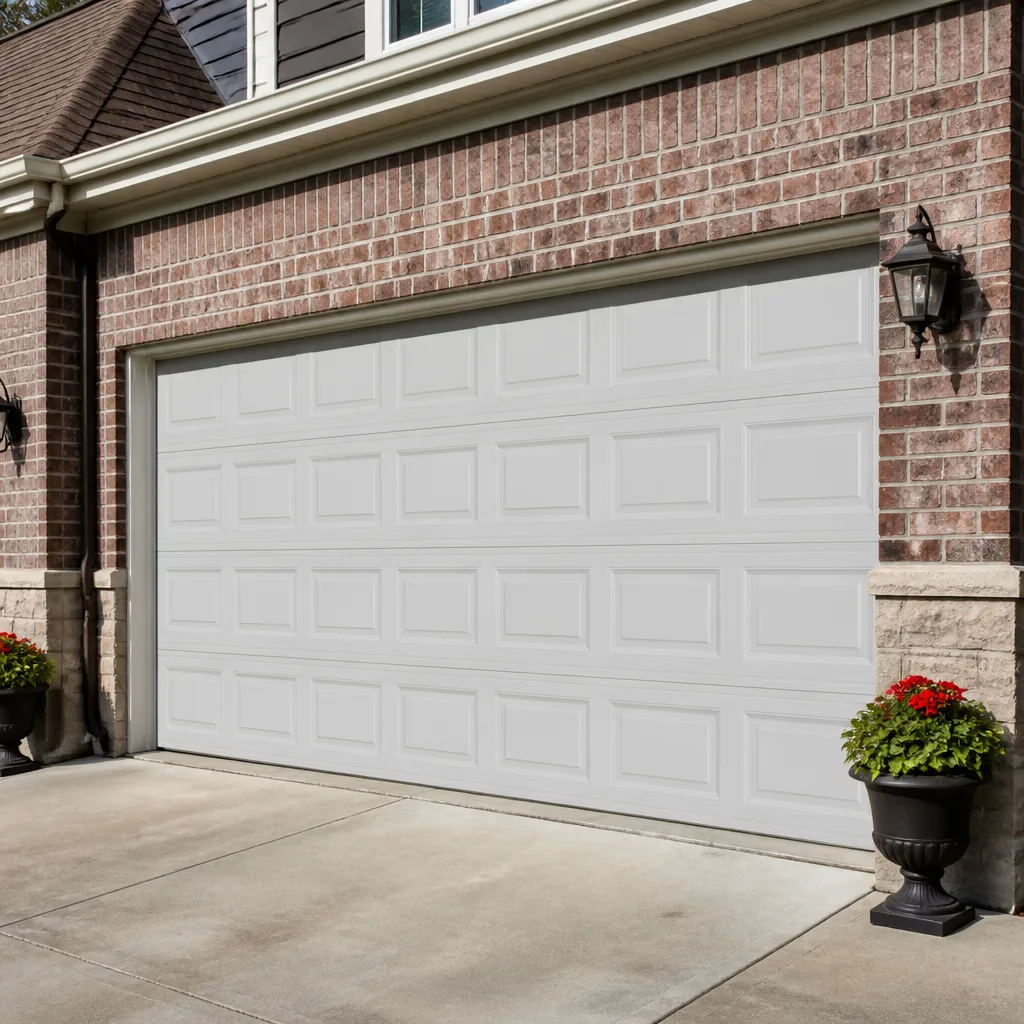 Raised-panel steel
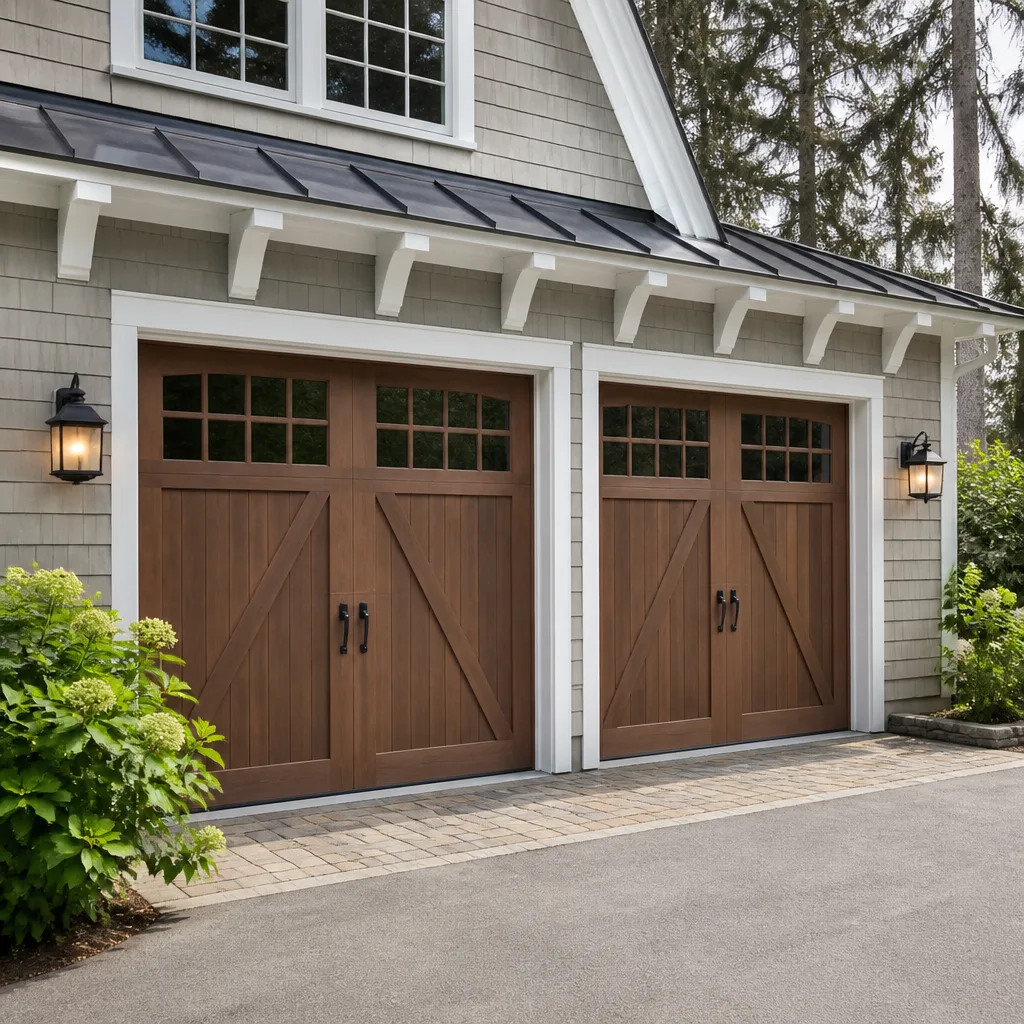 Carriage house
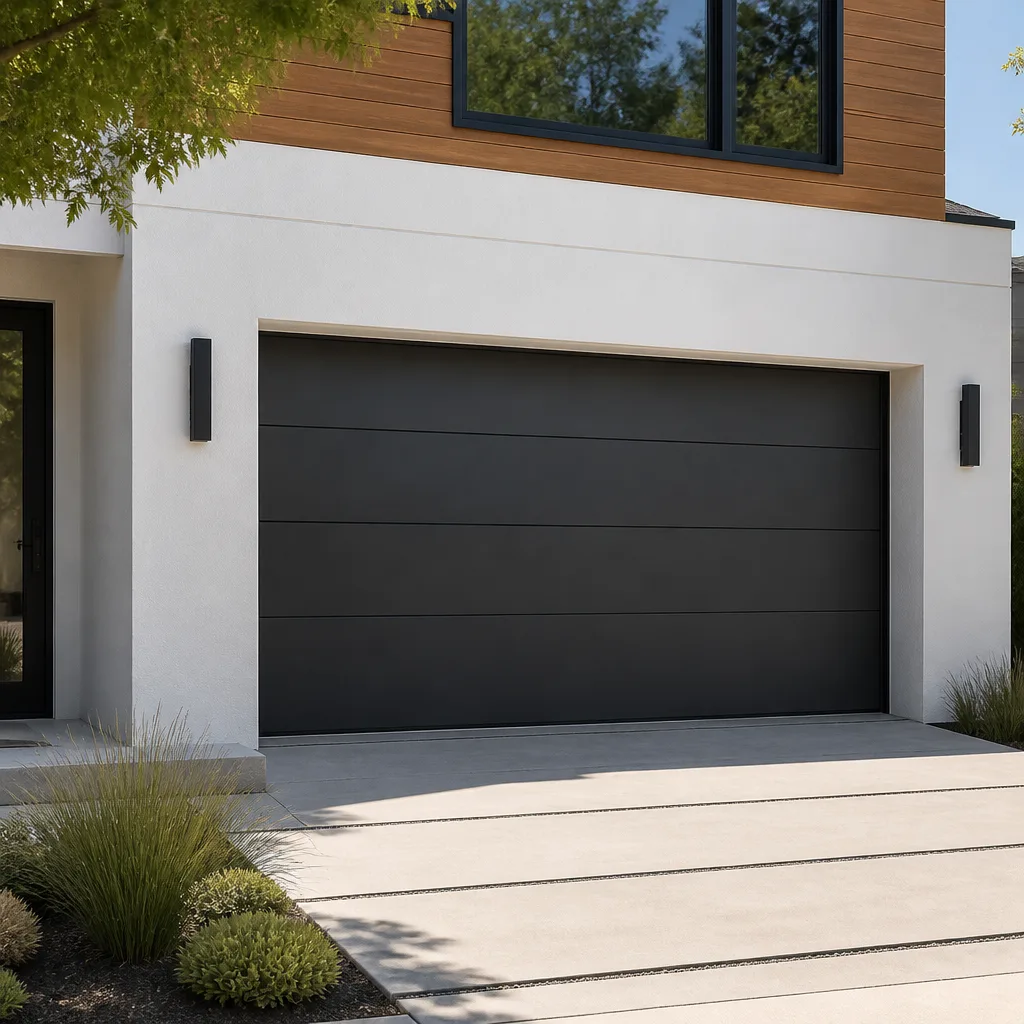 Modern flush
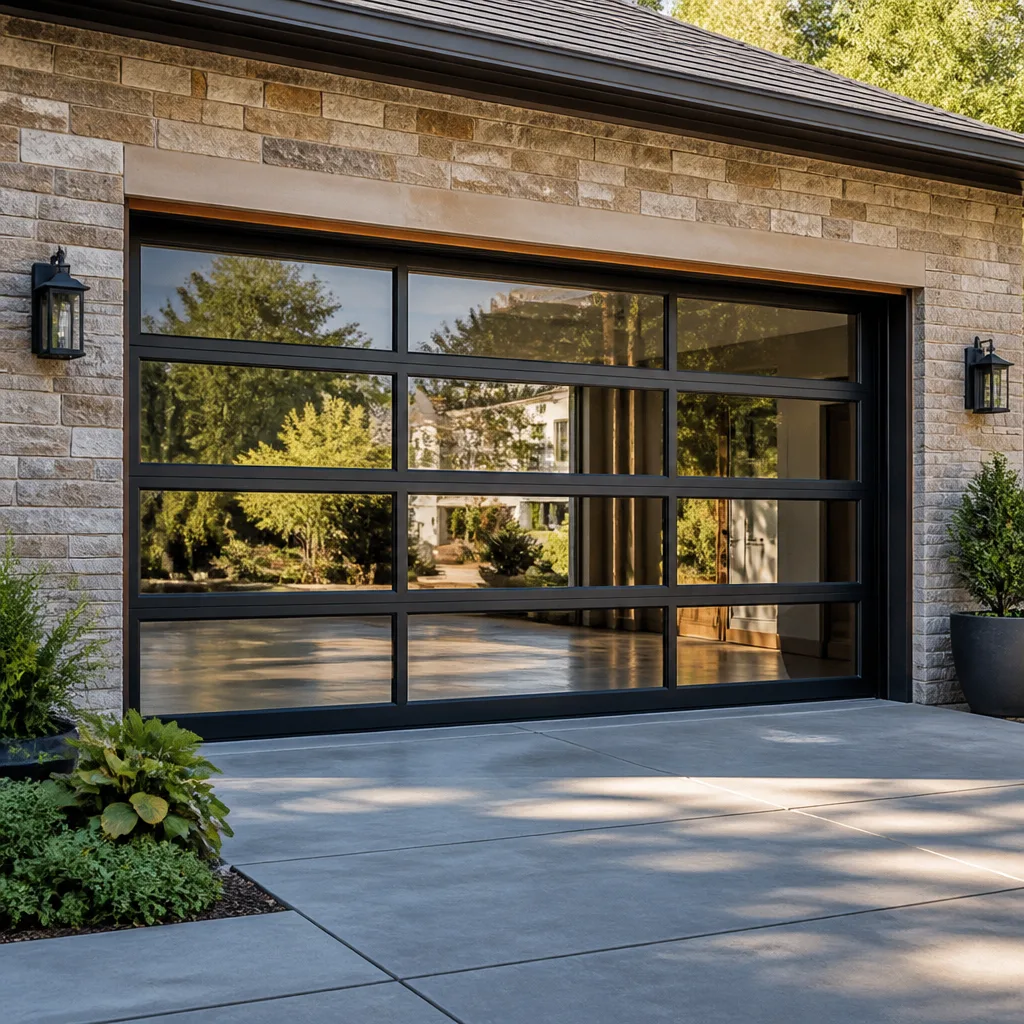 Full-view glass
 LiftMaster openers
 Chamberlain openers
Full 25-point door and opener safety check with every visit - springs, cables, rollers, tracks, and your LiftMaster or Chamberlain opener included
You get a price before we start. It does not change when the truck arrives.
Get your free estimateDIY vs Professional Garage Door: The Tampa Homeowner’s Decision Guide
Every torsion spring above a Tampa garage door stores enough tension to throw a steel winding bar through drywall at 180 miles per hour. That’s not an exaggeration from a safety manual. It’s the math of a 200-pound door counterweighted by springs under 8 to 12 full turns of torque. And yet, every spring in Florida, homeowners watch an eight-minute YouTube tutorial and decide they’ll save $200 by rewinding it themselves. This guide won’t tell you to never touch your garage door. It will tell you exactly which tasks belong in your hands, which belong in a licensed contractor’s, and where the law in Florida draws that line harder than most states. If you live in Tampa, this is the decision map.
Styles & brands we work with
Quick Answer
Most garage door maintenance tasks in Tampa are genuinely DIY-appropriate: weatherstripping, track lubrication, photo-eye sensor cleaning, and opener battery changes. Torsion spring replacement, cable work, track realignment under load, and any repair involving the door’s counterweight system are not DIY under any circumstances. The calculation isn’t about skill. It’s about injury exposure, Florida Building Code permit triggers, and the fact that a failed DIY spring repair typically costs $450 to $900 more than calling a professional the first time. In Tampa’s specific climate, the line between DIY and professional matters more than in most markets because humidity, salt air, and storm-driven debris accelerate wear on components that are already hazardous.
Table of Contents
- The Only Two Components That Can Kill You: Springs and Cables
- What the Florida Building Code Actually Says About Garage Door Work
- Tampa’s Climate Tax: Humidity, Hurricanes, and Why Your Door Ages Faster
- The Safe DIY List: Seven Tasks You Can Do This Weekend in Tampa
- Honest Cost Comparison: What You Actually Save (and Risk) Doing It Yourself
- The Tool Threshold: Why the Math Rarely Pencils Out for Homeowners
- The Middle Path: What to Ask a Professional to Teach You
- Common Mistakes to Avoid
- When to Call a Professional
- Frequently Asked Questions
- The Bottom Line
The Only Two Components That Can Kill You: Springs and Cables
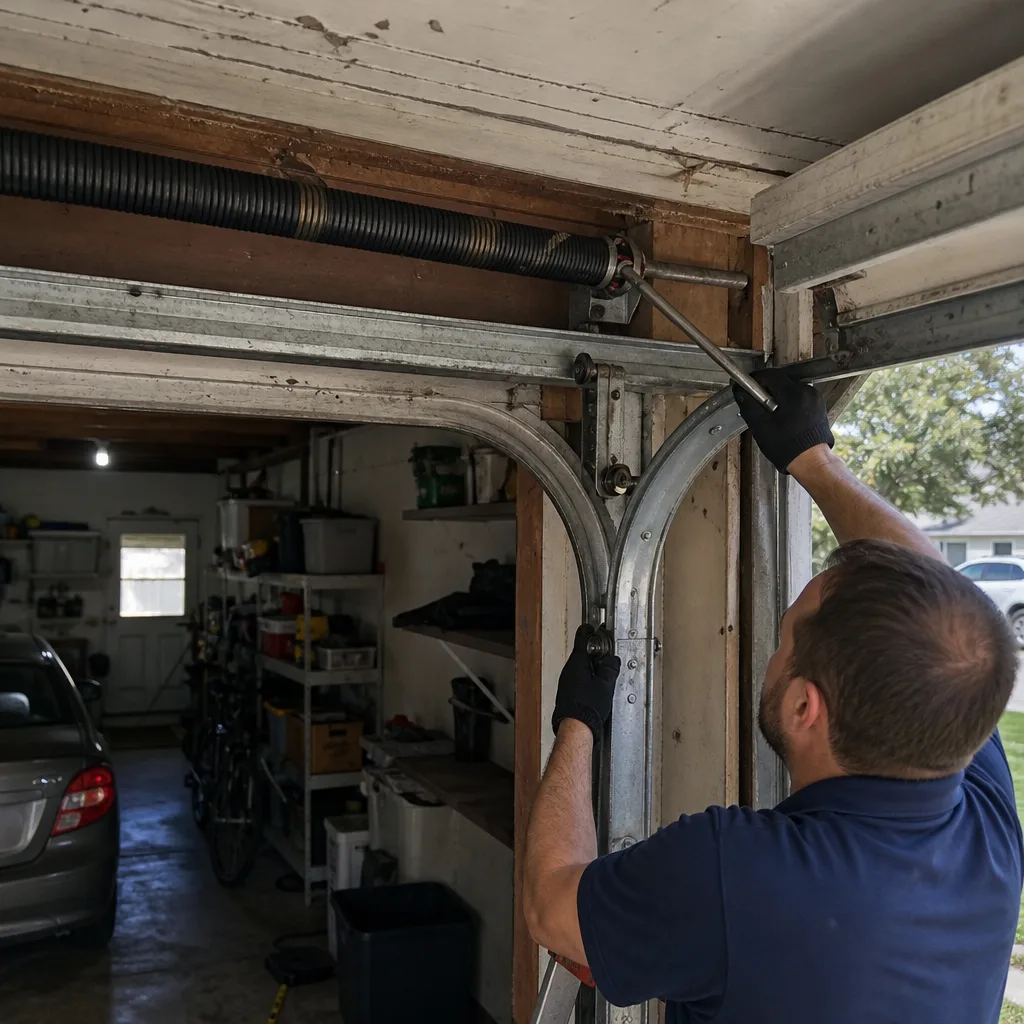
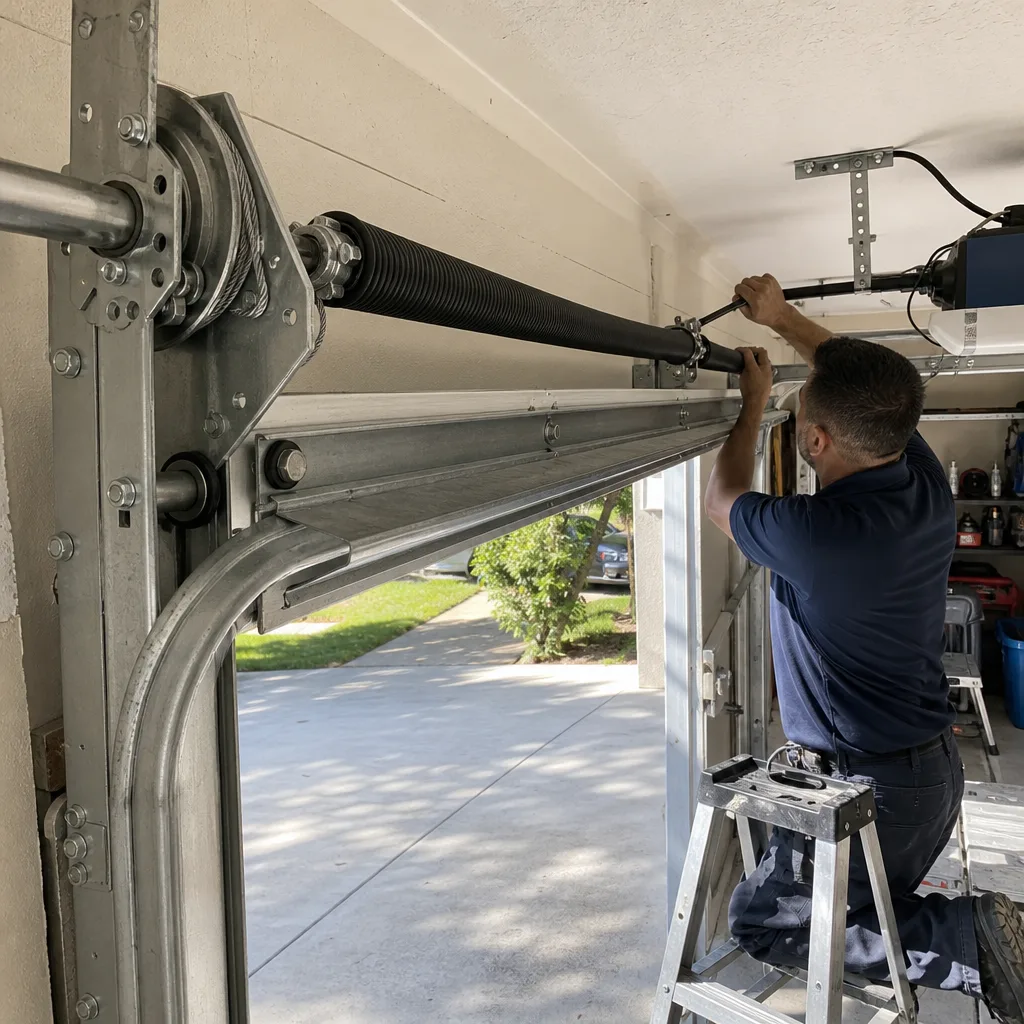
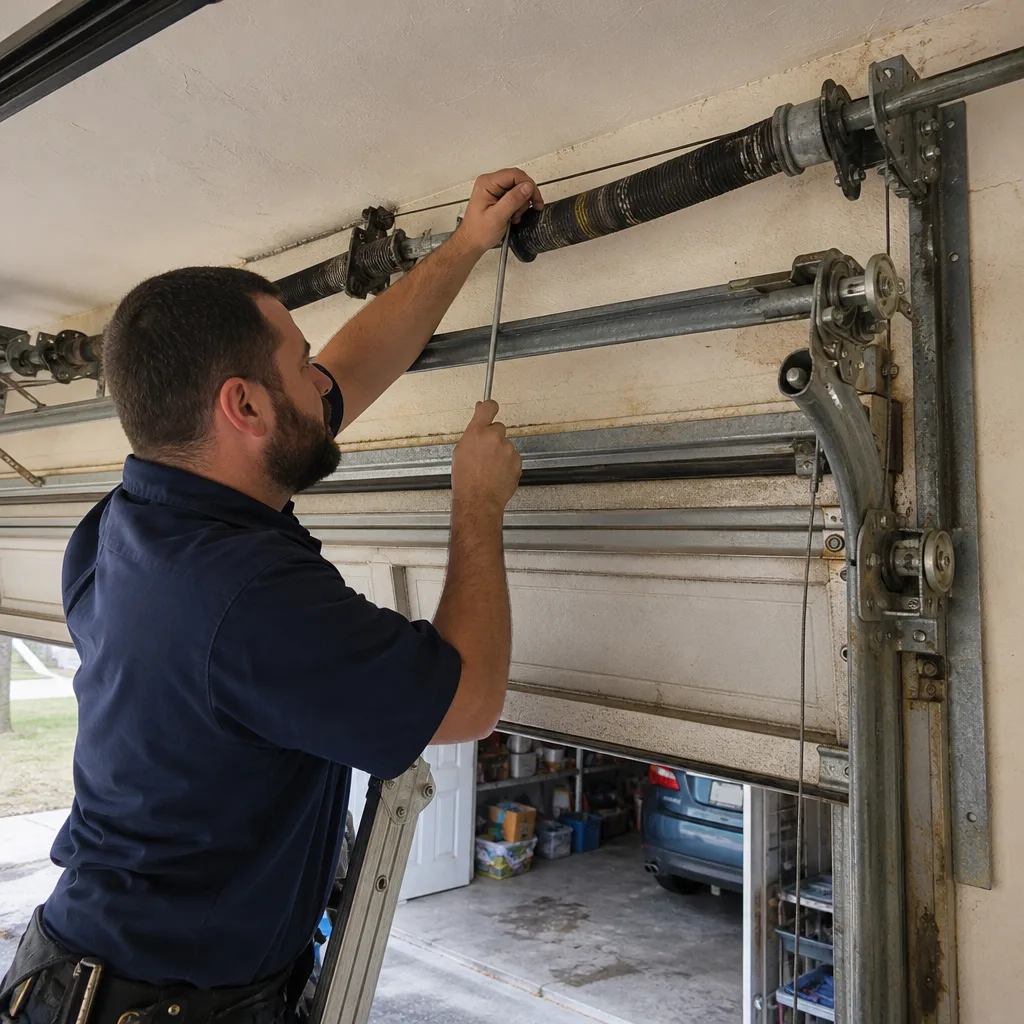
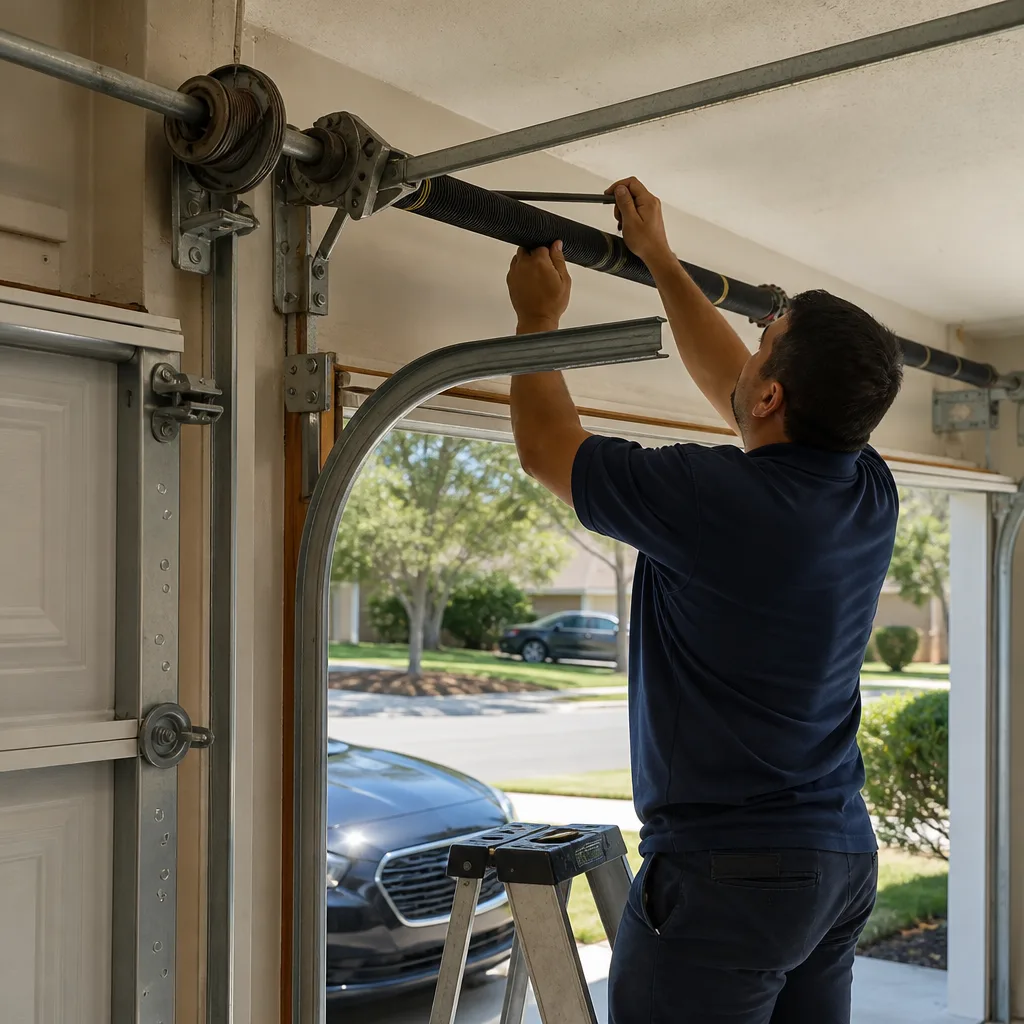
We’ll start with the two components that turn a $50 part into a $40,000 hospital bill. Torsion springs are wound under extreme tension above the door opening. Extension springs, more common on older Tampa homes built before 1990, stretch along the horizontal tracks and store energy just as violently when stretched. Both types do the same job: they counterbalance a door that weighs between 130 and 400 pounds so a small opener motor can lift it. When a spring snaps, the energy releases instantly. When a homeowner attempts to remove or adjust a spring without the correct winding bars, the same release happens while a steel rod is held by hand.
Cables are the second lethal component, and they get less attention than they should. When a cable frays or snaps on one side, the door’s entire weight shifts to the remaining cable and the spring torque becomes unbalanced. The door suddenly becomes a guillotine with a motor attached. On a standard 16-foot door in a New Tampa home, that’s roughly 200 pounds of steel, glass, and hardware dropping through the track. A homeowner standing in the wrong place while trying to “just reattach the cable” is standing under the single most dangerous point of failure in the entire residential mechanical system.
Our position at Vintage Garage Door Service is blunt: there is no safe DIY procedure for spring or cable work. The tools alone cost more than the service call, and we’ll get into that math later. If your spring is broken in Tampa, the door won’t open, and that’s actually the safest possible failure mode. The danger starts when someone tries to force it open manually or “take a look” at the spring bracket with the tension still on it. We train our technicians on garage door repair in Tampa with a hard rule: no spring or cable adjustment happens without proper winding bars, and no spring remains tensioned while a human is positioned in its strike zone.
The short version: if the part you want to fix is a spring or a cable, stop reading this guide and call us. If it’s anything else, the next sections will walk you through what’s actually safe.
What the Florida Building Code Actually Says About Garage Door Work
Florida doesn’t leave this to common sense. The Florida Building Code (FBC) treats garage doors as structural components subject to wind load requirements, and the rules for Tampa are stricter than for most of the country. Tampa sits in a High Velocity Hurricane Zone (HVHZ) that sets specific wind-resistance standards for garage doors, particularly for homes built after 2002 when the Florida Building Code consolidated years of post-Hurricane Andrew patchwork. A garage door that fails during a storm doesn’t just expose your cars. It creates a breach that can pressurize your entire house and lift the roof off. This is why code inspectors in Hillsborough County look at garage doors during re-roofing and major renovation permits.
What does this mean for the DIY question? Three practical things.
- Replacing a full garage door in Tampa typically requires a permit. The permit is pulled by the licensed contractor doing the work, and the inspection verifies the door meets current wind-load and missile-impact standards. A homeowner-installed door without a permit creates a disclosure problem at sale. Florida’s seller disclosure form specifically asks about unpermitted work, and lying on it is fraud liability that follows the transaction.
- Spring replacement does not generally require a permit, but it does require the work to meet manufacturer specifications. If a DIY spring installation fails and damages the door or the opener, your homeowner’s insurance may take the position that unqualified work voids the claim. We’ve seen this play out in South Tampa where a wrong-size spring installation destroyed a Raynor door’s top section.
- Repairs that alter the door’s structural frame, add bracing, or change the door’s wind-load rating trigger code review. This applies to older Tampa homes in Bayshore, Palma Ceia, and Tampa Heights where original doors never met HVHZ standards and homeowners try to reinforce them without understanding the load calculations.
The code implication is rarely discussed in DIY garage door forums because most forum participants don’t live in a hurricane zone. But if you own a home in Tampa, your garage door is a wind-load component first and a convenience feature second. That changes the stakes for the DIY vs. professional question, especially for anything that involves door replacement or structural modification. Our garage door installation service in Tampa handles permit coordination as a standard part of the job, which is one of the quieter reasons homeowners choose a licensed installer over a weekend project.
Tampa’s Climate Tax: Humidity, Hurricanes, and Why Your Door Ages Faster
Tampa’s environment doesn’t just shorten garage door lifespans. It changes which maintenance tasks are worth doing yourself and which are wasted effort. Three climate factors matter most.
First, humidity. Tampa’s average relative humidity runs 70 to 90 percent for most of the year, and that means rust forms on exposed hardware at a rate inland homeowners never see. Track brackets, hinges, and cable fittings on doors in Westchase, Carrollwood, and South Tampa develop surface rust within three to five years of installation unless the homeowner regularly treats them. This rust isn’t cosmetic. It creates friction that forces the opener to work harder, which shortens its lifespan and strains the springs. A homeowner who lubricates their tracks and hinges twice a year will genuinely extend the life of their system, and that task is fully DIY-appropriate.
Second, salt air. Homes within three miles of Tampa Bay or the coast get salt-mist exposure that accelerates corrosion on untreated steel components. Doors manufactured by Amarr and Wayne Dalton with galvanized tracks and powder-coated panels hold up better in this environment, but hardware still needs a corrosion inhibitor. This is why we tell homeowners in Davis Islands and Ballast Point that their maintenance schedule should run twice as often as the manufacturer’s recommendation.
Third, storm cycles. Tampa’s afternoon thunderstorm season from June through September dumps rain on garage door exteriors, and if the bottom weatherstripping is cracked or compressed, that water finds its way to the lowest panel and the floor track. Once water pools inside the track, you get rust, warping, and, eventually, a door that binds when the opener tries to lift it. The fix is a $20 weather seal and thirty minutes of DIY labor. The failure, if ignored, becomes a $300 to $600 professional track realignment.
The climate tax is the quiet reason many Tampa garages need professional attention years before identical doors in Orlando or Lakeland. We see it every week: a Chamberlain opener from 2016 that would still be running in a drier climate, but in Tampa the board has corroded connectors, and the rail has surface rust, and the homeowner didn’t know to check. Some of this you can manage yourself. The next section tells you which parts.
The Safe DIY List: Seven Tasks You Can Do This Weekend in Tampa
Not all garage door work is hazardous. Most of it, in fact, is basic mechanical maintenance that any attentive homeowner can handle with tools they already own. Here are seven tasks that are genuinely DIY-appropriate in Tampa, ranked from simplest to most involved. None of these involve spring tension, cable disconnection, or working under a suspended door.
- Photo-eye sensor alignment and cleaning. The most common reason a garage door won’t close in Tampa is that one of the two photo-eye sensors near the floor has been knocked slightly out of alignment or coated with dust and cobwebs. Wipe the lens with a soft cloth, check the small light to confirm it’s receiving power, and gently adjust the bracket until the indicators show alignment. This is a five-minute fix with a screwdriver. No special tools, no danger.
- Weatherstripping replacement on the bottom panel. Tampa’s rain makes this the highest-value DIY task on the list. The rubber stripping along the bottom of the door decays in UV and heat, and a replacement strip from any hardware store costs $15 to $30. Slide out the old strip, slide in the new, trim to length. It takes twenty minutes and prevents the water damage described above.
- Track lubrication with white lithium grease. The vertical and horizontal tracks, hinges, and rollers should be lubricated every six months in Tampa’s humidity. Use a white lithium or silicone spray, never WD-40, which is a solvent that strips existing lubrication. Wipe away excess so it doesn’t collect Tampa’s fine dust and sand.
- Opener battery replacement. If your Craftsman or Chamberlain opener remote or keypad stops responding, the fix is usually a $5 battery, not a service call. Slide open the remote case, swap the battery, test it from your driveway. If it still fails after a fresh battery, then you have a signal or board issue worth professional diagnosis.
- Door balance test (diagnostic only, no adjustment). Disconnect the opener using the red emergency release handle, then manually lift the door by hand. It should lift smoothly and stay in place when you let go. If it’s heavy or drops, you have a spring problem. Do not attempt to fix it. This test is safe because you’re not touching any component under tension. You’re just assessing.
- Track bracket tightening. Bolts and brackets vibrate loose over time, especially on doors that open four or more times a day. Use a socket wrench to snug down brackets where they meet the wall and ceiling. Do not loosen or remove the brackets from the track. Just check for play and take up the slack.
- Panel and window cleaning with a mild detergent. Tampa’s pollen, moss, and grime coat garage doors seasonally. A soft-bristle brush, mild soap, and a hose keeps steel and fiberglass doors clean and prevents the particulate build-up that eventually eats into coatings. This is the most straightforward maintenance you’ll do, and it matters for resale curb appeal in Tampa’s competitive neighborhoods.
All seven of these tasks are things we tell homeowners to handle themselves. They’re safe, they’re cheap, and they extend the life of the system. The moment the task touches a spring, cable, or load-bearing component, the DIY list ends.
Honest Cost Comparison: What You Actually Save (and Risk) Doing It Yourself
The DIY argument usually starts with cost savings. Let’s look at the actual numbers in the Tampa market, because the savings picture changes when you account for tool acquisition, failure risk, and the real cost of corrective labor.
Legitimate DIY Tasks: Clear Savings
- Weatherstripping replacement: DIY cost is $15 to $35 in materials. Professional cost in Tampa runs $90 to $150 including the service call. You save $75 to $115. This is real money, and the task is genuinely safe.
- Sensor cleaning and alignment: DIY cost is zero to $10 for a cleaning cloth and minor adjustment. Professional diagnostic fee runs $75 to $125. You save $75 to $125.
- Lubrication: DIY cost is $8 to $15 for a can of white lithium grease. Professional lubrication service runs $50 to $90. You save $40 to $75.
- Battery replacement: DIY cost is $5. Professional service call to change a remote battery runs $60 to $90, often waived if bundled with other work. You save $55 to $85.
Spring or Cable Work: The Math Flips
- Torsion spring replacement in Tampa typically costs $220 to $380 professionally, including the spring pair, labor, and balancing. A homeowner buying a single spring from an online supplier spends $50 to $120 on the part, then needs two winding bars ($30 to $60), a set of deep sockets ($20), and a torque wrench if the door is newer and has a hex winding system ($60 to $120). Basic tool cost: $110 to $200.
- If the installation goes wrong, and it does for first-timers more often than not, the correction costs more than the original repair would have. A door that comes off its tracks after a bad spring wind typically costs $250 to $600 in additional labor to realign, re-cable, and rebalance. The original professional repair would have been $220 to $380. The failed DIY attempt costs $360 to $800 out of pocket, not counting the hospital co-pay if it goes worse.
- Worse, a DIY spring installation that uses the wrong wire size or winding count doesn’t fail catastrophically but causes the opener to strain and burn out its motor. A replacement Chamberlain opener runs $280 to $450 plus installation. The spring “saved” you $180, and now the opener bill is three times larger than the original repair.
Here’s the number that matters: in our service area, the average corrective visit after a failed DIY spring or cable attempt costs about $380. The average professional spring replacement costs about $290. Do-it-yourself springs save you negative ninety dollars on average. If that math seems backwards, it’s because the online parts retailers don’t have to budget for liability, training, tools, or the hundreds of attempts their warranty department sees every year.
If you’re considering the DIY route and want a professional cost benchmark for comparison, call us for a free estimate. Our Tampa garage door repair team gives you the exact price before any work starts, so you know what you’re actually weighing.
The Tool Threshold: Why the Math Rarely Pencils Out for Homeowners
Let’s say you’ve decided you want to do spring or cable work yourself, and you’re willing to accept the injury risk. Before that, you need the right equipment. This isn’t a gatekeeping exercise. It’s a tool inventory that shows why most Tampa homeowners abandon the idea once they price it out.
For a torsion spring replacement on a standard residential door, the minimum professional tool set includes:
- Two proper winding bars. These are specifically sized, heat-treated steel rods designed to fit the winding cone holes. Using screwdrivers, pipe, or generic rods is how people lose fingers. Cost: $40 to $80 for a quality pair.
- A full socket set with deep-well sockets. Spring set screws are recessed, and a standard socket will strip the head. Cost: $30 to $90.
- A vise grip or C-clamp to secure the door in the open position before any spring work begins. Cost: $15 to $40.
- A level and winding-bar adapters if the door uses a newer hex-cast winding system. Some Raynor doors use proprietary torque-master tubes that require a specific adapter. Cost: $20 to $60.
- Safety glasses and work gloves rated for impact. If the spring lets go while you’re winding, that bar is coming at your face or your hand. Cost: $20 to $50.
- A torque wrench. Proper spring winding is measured, not estimated. Too loose and the door drops. Too tight and the door flies up. Cost: $60 to $150.
Total entry cost for a homeowner who owns none of these: $185 to $470. The professional spring replacement cost in Tampa: $220 to $380. The homeowner who does this once and never again spends nearly as much on tools as on professional service, takes on the full injury risk, and has no one to call if the spring they installed is the wrong wire gauge.
The math only works if you already own the tools, have experience with spring torque, and plan to do this repeatedly across multiple properties. That’s a contractor or a multi-door property owner, not a typical Tampa homeowner. The tool threshold is the underdiscussed reason most DIY garage door projects stop at weatherstripping and lubrication.
The Middle Path: What to Ask a Professional to Teach You
Here’s the part most guides skip: there’s a middle path between doing everything yourself and handing your entire garage over to a service company forever. When we do professional repairs in Tampa, homeowners regularly ask us to show them the maintenance tasks they can safely take over. We tell them yes, every time. A homeowner who understands their door’s basic mechanics is a better partner for the next repair, and they catch problems earlier.
During your next professional service visit, ask your technician to walk you through these four things:
- The balance test. Ask them to demonstrate the emergency release disconnect and the manual lift test, and to show you what a correctly balanced door feels like versus a spring that’s starting to lose tension. This is the single most valuable diagnostic habit a homeowner can learn.
- The lubrication points. There are about ten points that need lubricating on a standard door: the hinges, rollers, bearings, and the top of the rail on a screw or chain drive. Ask them to point to each one and tell you which lubricant to use. Five minutes of instruction buys you years of DIY maintenance.
- The sensor alignment check. Most sensor issues are alignment or debris, not electrical. A good technician will show you the indicator light patterns that tell you whether the sensor is seeing the beam or blocked, and how to adjust the bracket without throwing off the track.
- The weatherstripping wear pattern. Ask where the failure points are on your specific door. Different door brands wear differently. A Wayne Dalton door may crack at the corners, while an Amarr door may compress in the middle. Knowing your door’s pattern means you’ll catch it early.
We’d rather teach you these four things in ten minutes than have you guess, make an error, and pay for a larger repair later. That’s the vintage trade approach: pass on the knowledge, not just the invoice. More than half of our opener repair calls in Tampa start with a homeowner who misdiagnosed a maintenance issue as an opener failure. Ten minutes of instruction prevents those calls entirely.
Common Mistakes to Avoid
- Using WD-40 on tracks and rollers. WD-40 is a water-displacement solvent, not a lubricant. It cleans and then dries, leaving metal parts with less protection than before. In Tampa’s humidity, that means rust within weeks. Use white lithium or silicone spray instead.
- Forcing a door open when the spring is broken. A broken spring means the door weighs its full 130 to 400 pounds. Forcing it up by hand or with the opener strains the cables, bends the track, and can pull the entire assembly off its mounts. When the spring snaps in a South Tampa garage, the door stops there until the spring is replaced.
- Replacing only one spring on a two-spring door. Torsion systems use two springs because the door’s weight and cycle rating require balanced torque across both sides. When one breaks, the other is usually at the end of its rated life too. Replacing only the broken one leaves an unbalanced door and a second failure months away.
- Buying springs without matching the wire gauge and cycle rating. A spring that is too weak leaves the door heavy and burns out the opener. A spring that is too strong makes the door surge upward and can rip the top panel apart. Proper spring sizing involves door weight, drum circumference, cable length, and desired cycle life. It’s conversion math, not a guess.
- Ignoring a loud door for six months in Tampa humidity. The grinding, squealing, or banging that started in May will be a full track or roller failure by October. Tampa’s humid air corrodes what friction has already weakened. Early attention to unusual noise is the cheapest repair you’ll ever book.
- Thinking the opener remote is the opener. If the wall button opens the door but the remote doesn’t, the problem is a battery, a board, or a signal issue, not the motor. Many Tampa homeowners buy a new opener when a $5 battery and a simple reprogramming would have fixed it. Ask for diagnosis before replacement.
When to Call a Professional
Call a professional if you see a visible gap or break in a torsion or extension spring, if either cable is frayed or has slipped off its drum, if the door is off its track, if the opener motor runs but the door doesn’t move, or if the door is visibly sagging on one side when opened. Any of these indicates a load-bearing failure in progress, and the safest action is to stop using the door and call someone who does this daily.
We also recommend a professional call for any full door installation in Tampa, because of the permit and wind-load considerations covered earlier, and for any opener replacement that involves new wiring, sensor repositioning, or integration with a modern Wi-Fi-enabled system. Vintage Garage Door Service offers free estimates in Tampa, and we’ll tell you over the phone whether your issue sounds like a simple maintenance task you can handle or something that needs a technician. Call (866) 253-5794 and describe what you’re seeing.
Frequently Asked Questions
Professional torsion spring replacement in Tampa typically runs $220 to $380, including the spring pair, labor, and door balancing. The price varies by door weight, spring cycle rating, and whether the homeowner wants upgraded springs with a longer lifespan. Call (866) 253-5794 for an exact quote on your specific door, free of charge.
You can legally replace a garage door spring yourself in Florida, but you shouldn’t. Springs are under extreme tension, and the tools required cost nearly as much as professional service. A failed DIY spring installation in Tampa typically costs $360 to $800 to correct, which is more than the professional repair would have cost originally.
Yes, replacing a full garage door in Tampa generally requires a permit because garage doors are structural wind-load components under the Florida Building Code. Licensed contractors pull the permit and schedule the inspection. Repairs to springs, cables, and openers typically do not require permits, but the work must meet manufacturer specifications.
Photo-eye sensor cleaning and alignment, bottom weatherstripping replacement, track and hinge lubrication, opener battery swaps, panel cleaning, and the manual balance test are all safe DIY tasks. Avoid spring work, cable work, track realignment under load, or anything that requires disconnecting the counterweight system.
Tampa’s humidity, salt air near the bay, and storm-season rain accelerate rust on tracks and hardware and cause weatherstripping to decay faster. Homes within three miles of Tampa Bay see corrosion rates roughly twice that of inland Florida, which means more frequent lubrication and earlier hardware replacement.
At Vintage Garage Door Service, no. The price is quoted and agreed before any work begins, and it doesn’t change unless you ask us to add additional work while we’re on site. Our Tampa repair estimates are free, and the price we quote is the price you approve.
Yes, and it’s the most common situation we see. A door that’s off balance strains the opener, and an opener that’s misaligned damages the door. Vintage Garage Door Service handles the full system: doors, openers, and all associated hardware. One call covers the entire garage door system, whether the problem is the panel, the spring, the track, or the LiftMaster on the ceiling.
For emergency spring failures that leave a door inoperable, professional services in Tampa typically offer same-day or next-day dispatch. Call (866) 253-5794 and describe the issue, and we’ll give you the soonest available window. Spring replacement itself takes about an hour for most single residential doors.
The Bottom Line
The DIY vs. professional garage door decision is not a personality test. It’s a task-based line with clear safety and financial stakes. Weatherstripping, lubrication, sensor alignment, and battery swaps are yours to handle, and doing them well saves you $200 to $400 a year in Tampa service calls. Springs, cables, track work, and full door installations belong with a licensed professional because the injury risk is real, the code implications are serious, and the financial case for DIY simply doesn’t work once tools and corrective labor are counted. Do the maintenance, learn from your technician, and make the call when the work crosses the line. That’s the sensible Tampa homeowner’s decision.
Written by the team at Vintage Garage Door Service, serving Tampa since 2012.
Need a professional assessment? Call (866) 253-5794 for a free estimate. We know your brand, we know this climate, and we’ll tell you straight what needs fixing.
See the difference
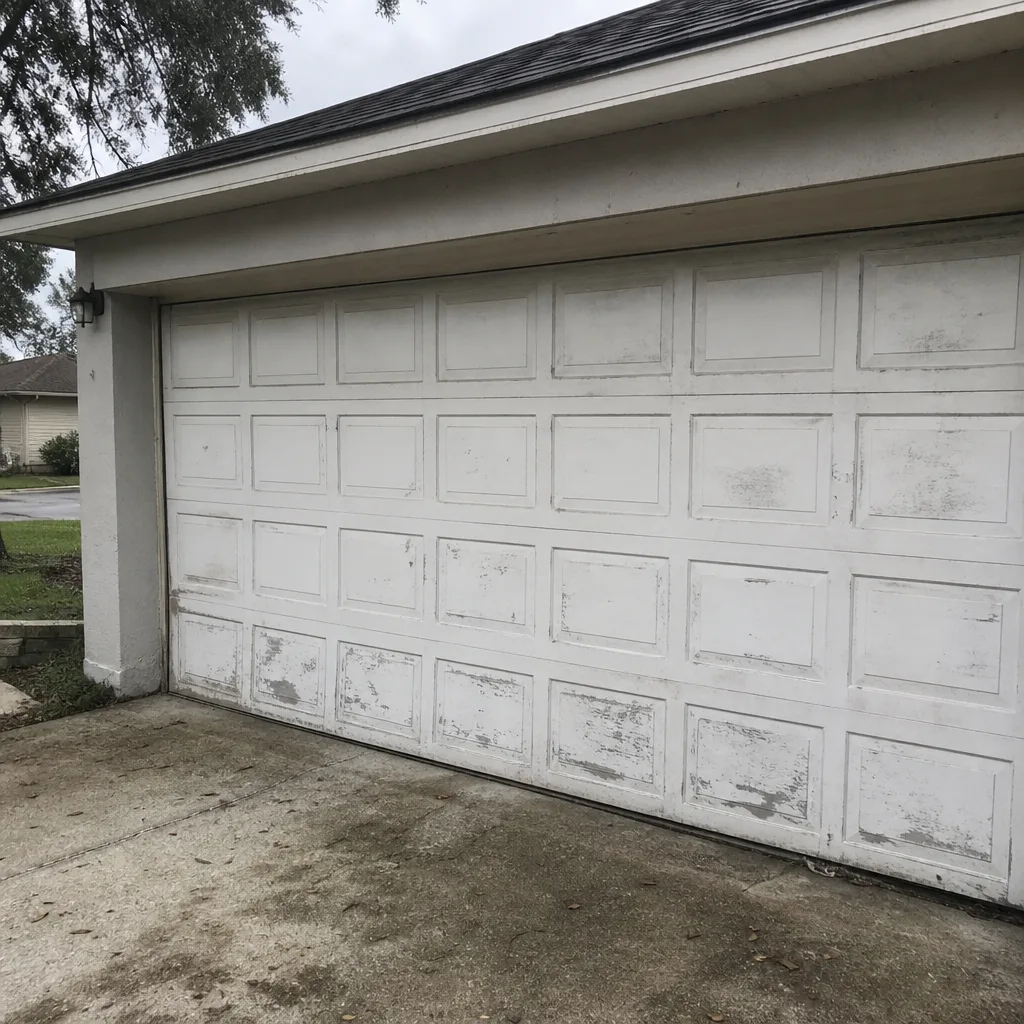 Before
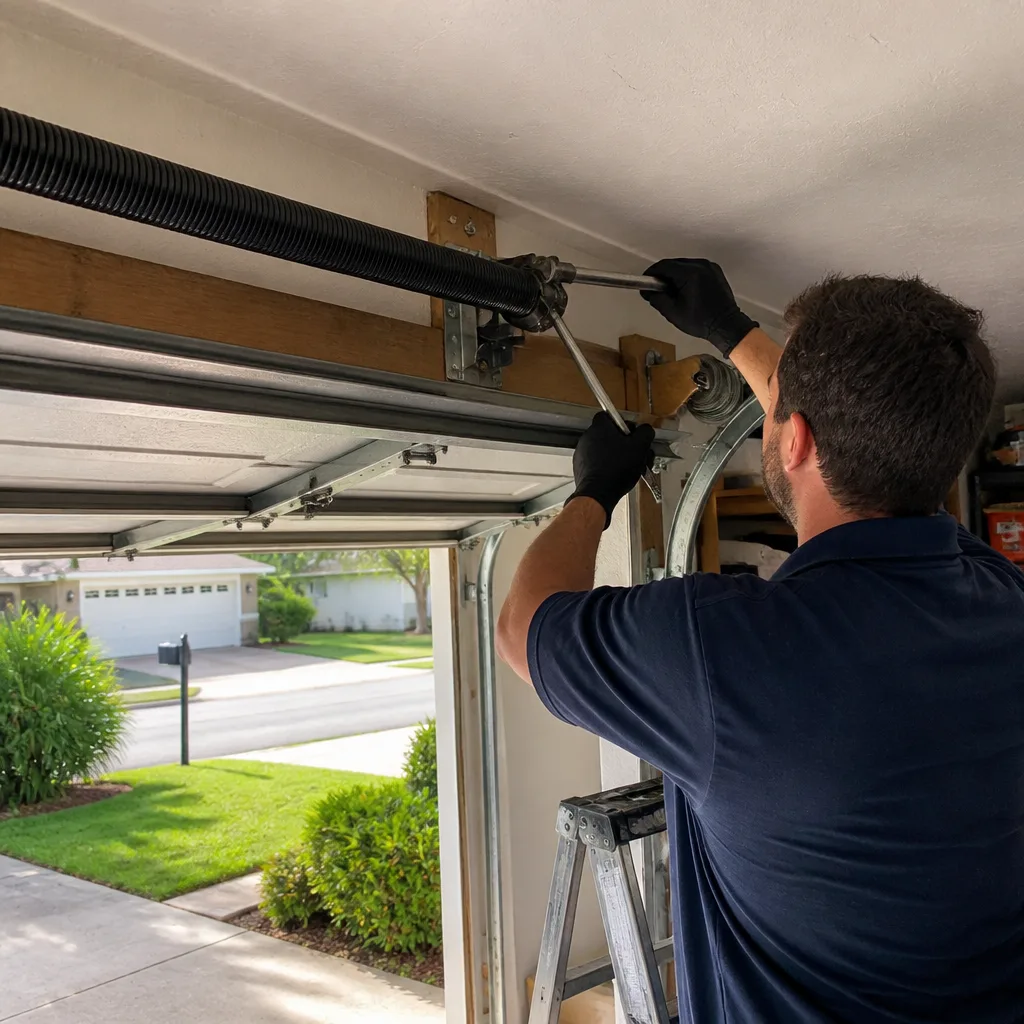 After
 Before
 After
 Before
 After