

Last updated October 31, 2026
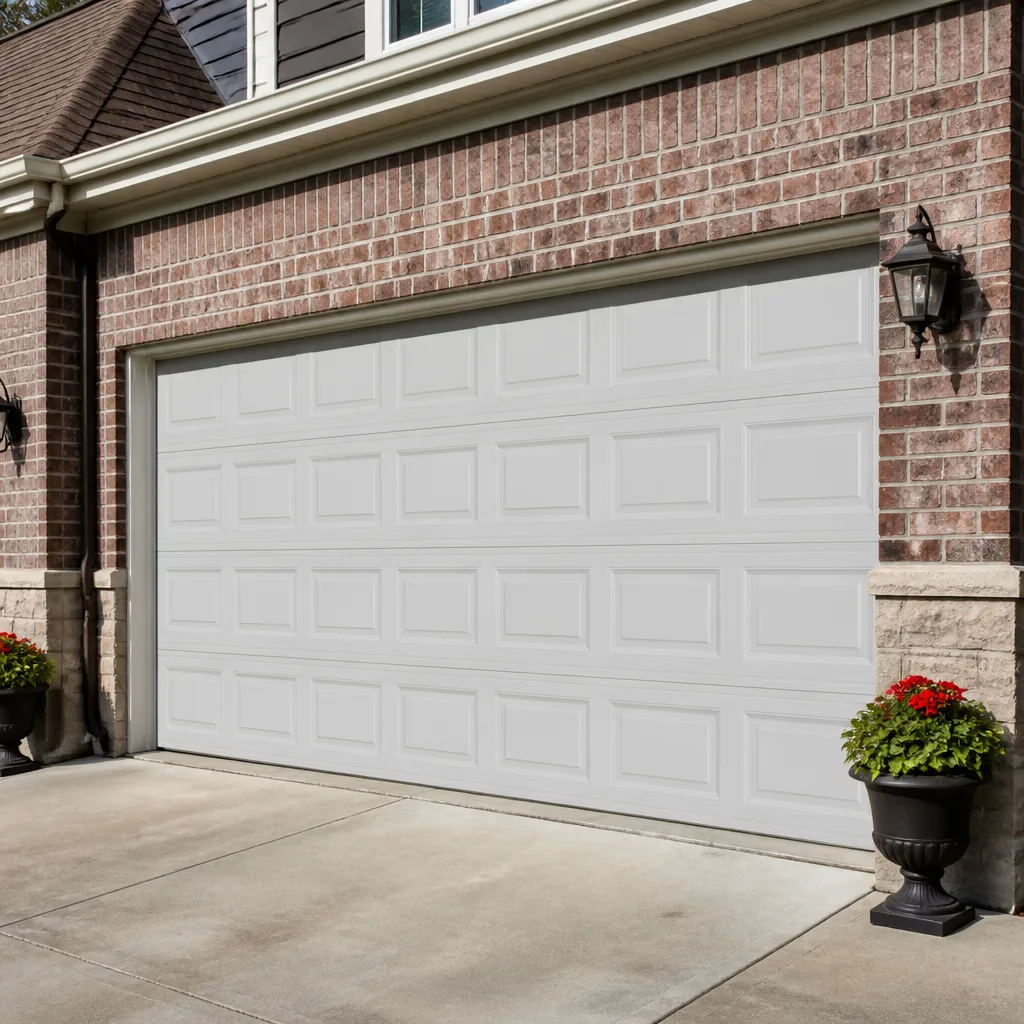 Raised-panel steel
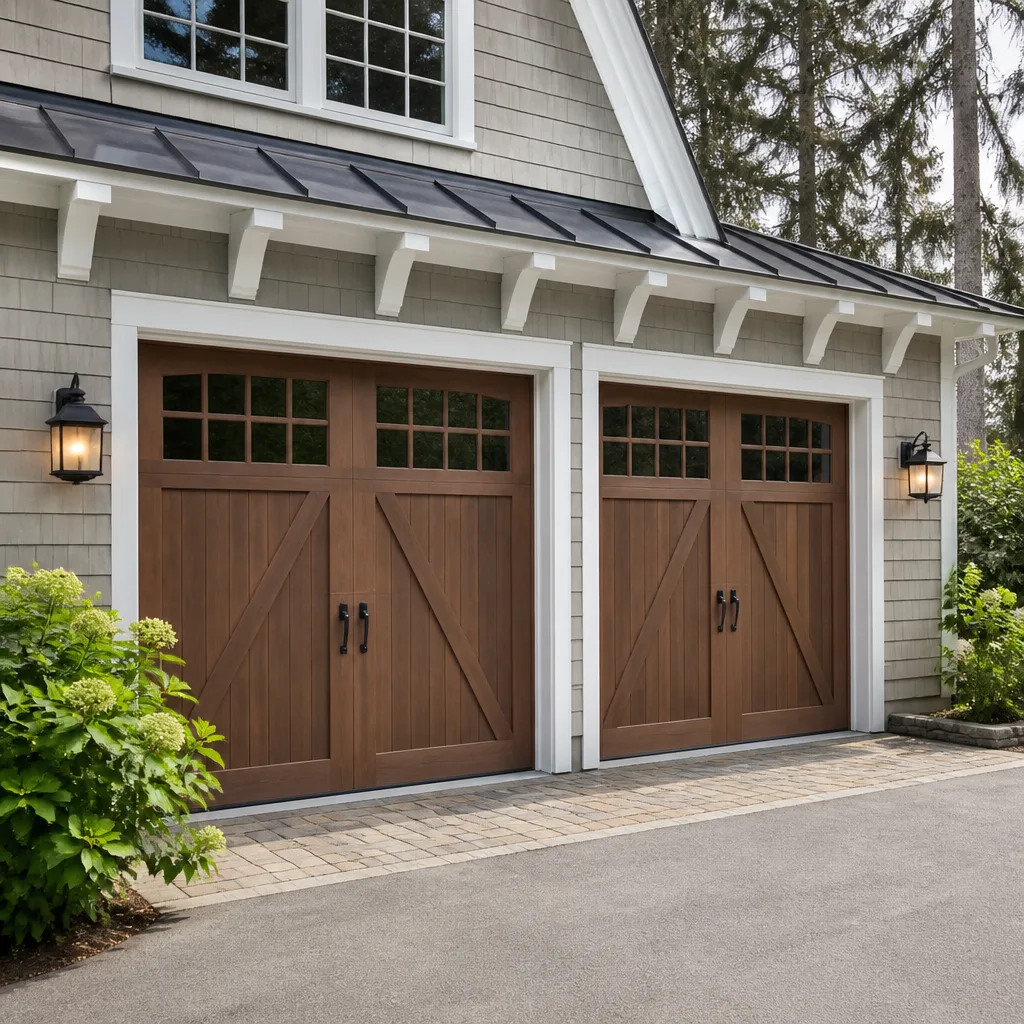 Carriage house
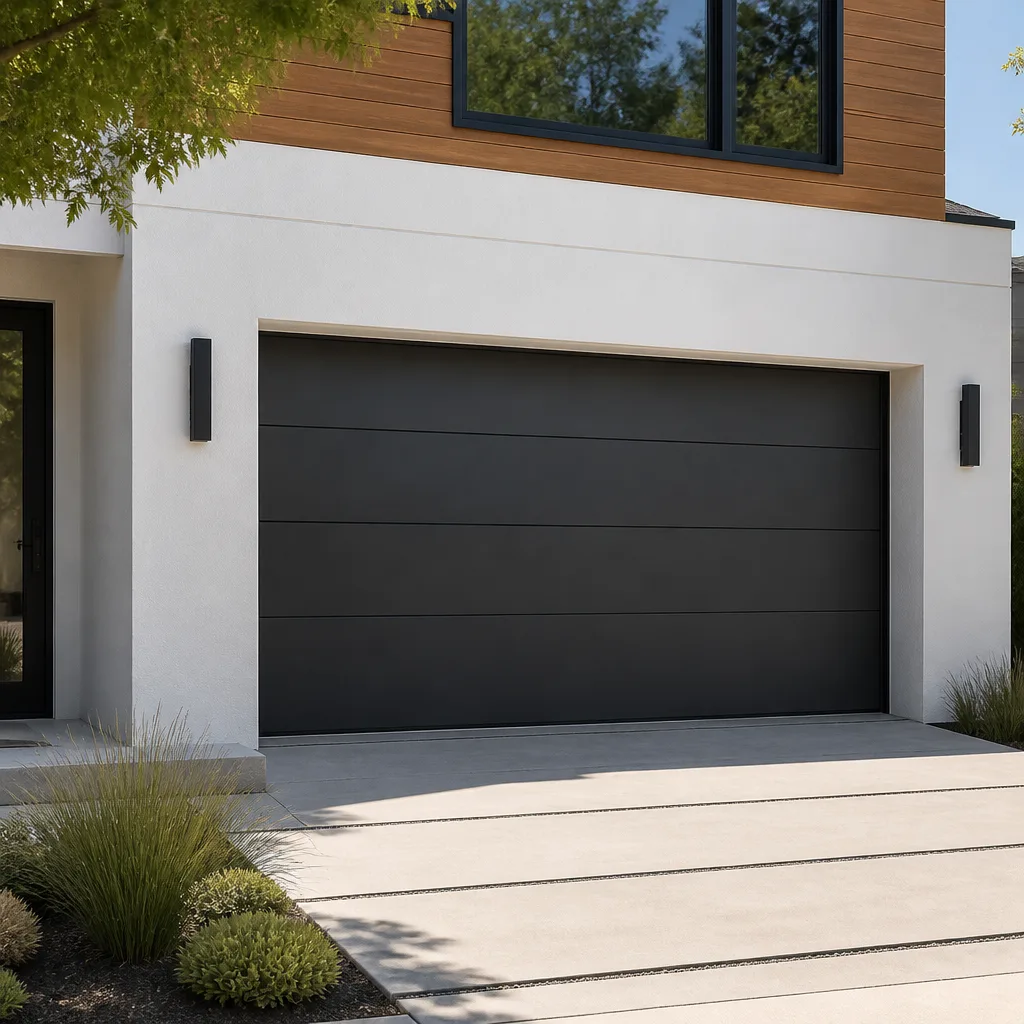 Modern flush
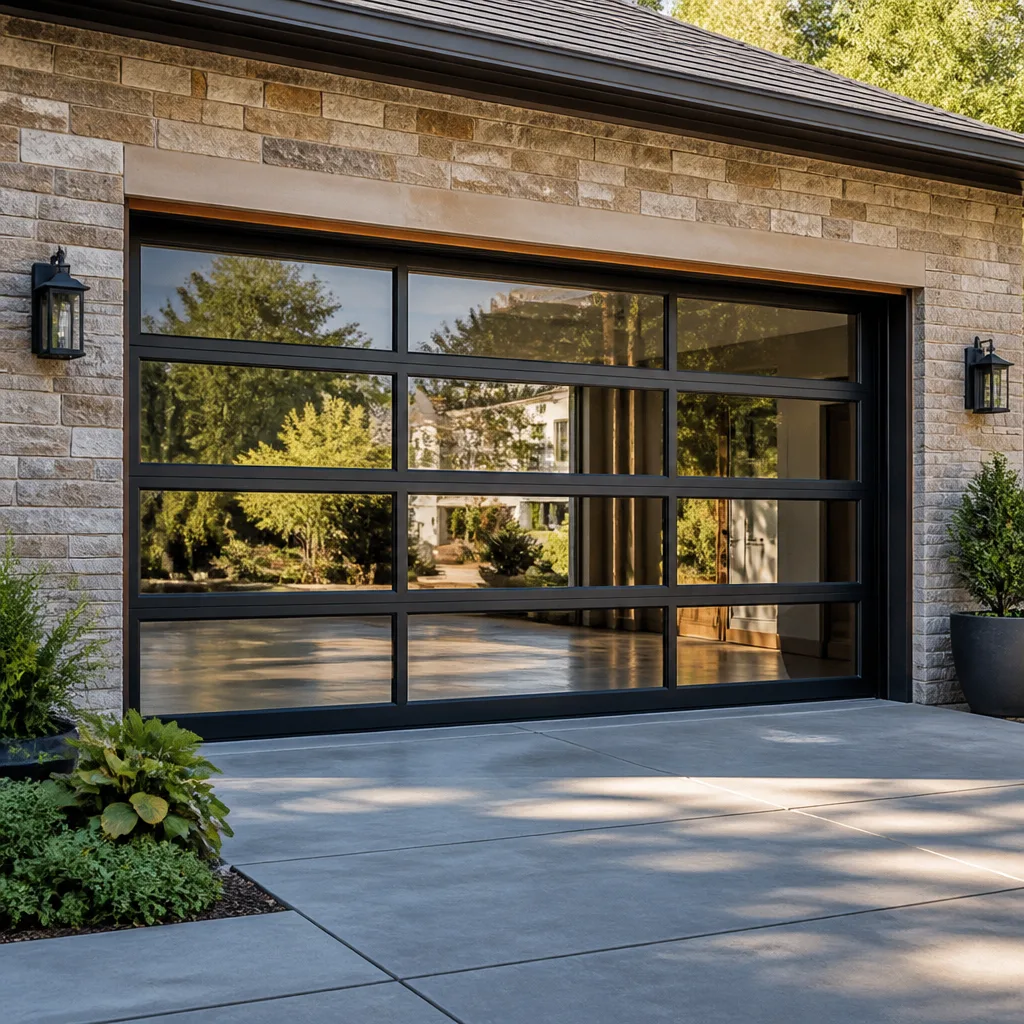 Full-view glass
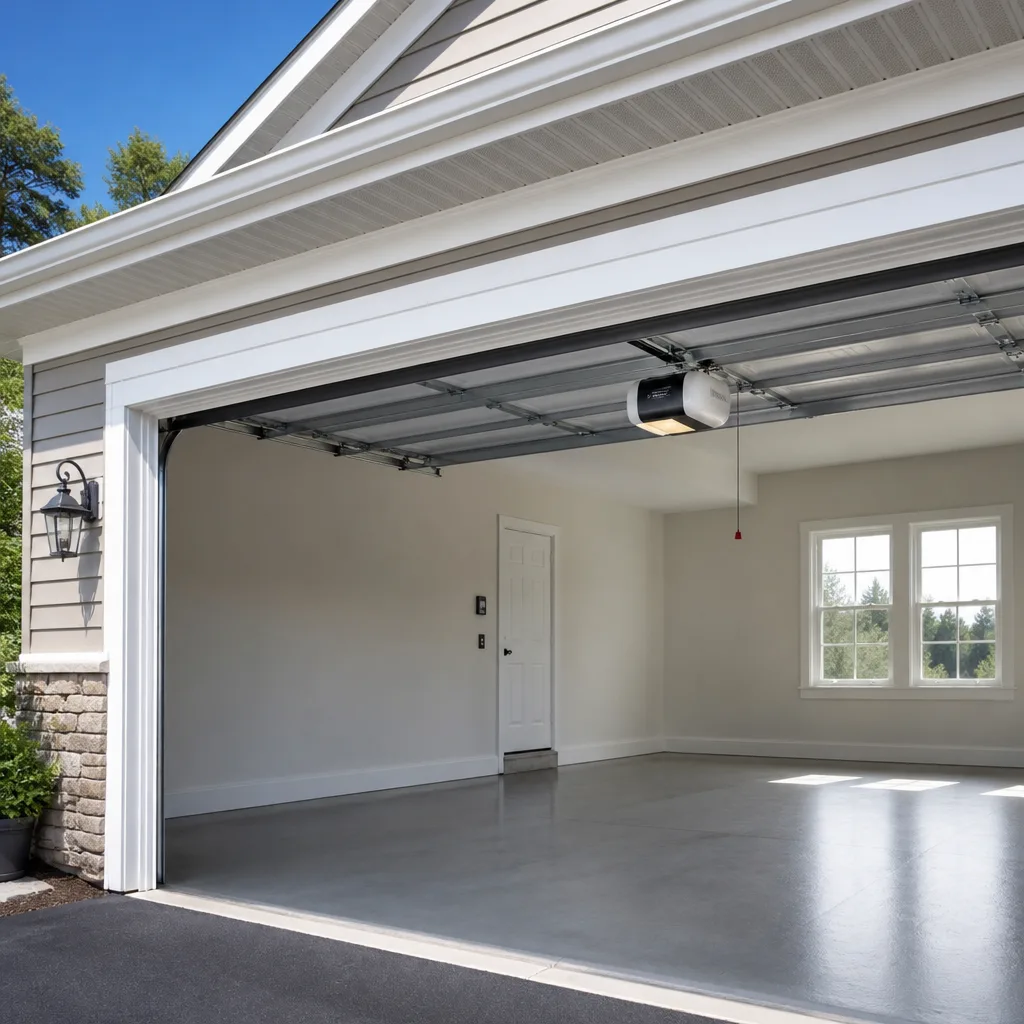 LiftMaster openers
 Chamberlain openers
Full 25-point door and opener safety check with every visit - springs, cables, rollers, tracks, and your LiftMaster or Chamberlain opener included
You get a price before we start. It does not change when the truck arrives.
Get your free estimateThe Complete Garage Door Repair Guide for Tampa Homeowners
A standard torsion spring in Phoenix might last 10,000 cycles without complaint. The same spring in Tampa, exposed to salt air off the bay and summer humidity that hovers near 90%, can corrode from the inside out and snap years earlier. Most homeowners never see it coming because nobody told them the climate was working against their door. This guide explains exactly how Tampa’s weather attacks your garage door system, which repairs escalate fastest in this environment, what you can safely handle yourself, and when to call for Garage Door Repair services. You’ll learn the seasonal rhythm of garage door failures here, how to document storm damage for insurance, and why brand-specific knowledge matters more in Tampa than in drier inland markets.
Styles & brands we work with
Quick Answer
The Complete Guide to Garage Door in Tampa breaks down typical repair costs: $95 to $350 for most common fixes, with spring replacement running $180 to $340 and opener repair between $120 and $280, depending on brand and part availability. Because Tampa’s humidity and salt air accelerate corrosion on springs, cables, and hardware, repairs that would be routine in inland cities often require replacing multiple components here. For anything involving torsion springs, cables under tension, or an opener that won’t respond, call a trained technician at (866) 253-5794, same-day appointments are often available in the Tampa metro area.
Table of Contents
- Why Tampa’s Climate Is Harder on Garage Doors
- The Five Most Common Failure Points in Tampa
- DIY-Safe Repairs vs. What’s Legally Off-Limits in Florida
- Tampa’s Seasonal Repair Calendar: What to Check and When
- Brand-Specific Quirks We See Across Tampa Neighborhoods
- Documenting Storm Damage for Your Insurance Claim
- What Garage Door Repairs Actually Cost in Tampa
- Choosing the Right Technician for Your Door
- Common Mistakes to Avoid
- When to Call a Professional
- Frequently Asked Questions
- The Bottom Line
Why Tampa’s Climate Is Harder on Garage Doors Than Most Guides Admit
Most garage door repair articles are written for a national audience, which means they describe average conditions that have very little to do with what happens in Tampa. The reality is that this region creates a specific set of stressors that accelerate normal wear in measurable ways.
Tampa sits on the Gulf coast, which means salt aerosol from the bay and the Gulf of Mexico travels inland for miles. That salt settles on exposed metal components: springs, cables, hinges, rollers, and the torsion tube. When combined with the region’s characteristic humidity, which averages 74% year-round and climbs higher in summer, you get a near-constant electrochemical corrosion environment. The rust doesn’t just sit on the surface. It penetrates spring steel, causing microscopic pitting that concentrates stress and leads to sudden failure.
We’ve seen doors throughout South Tampa, Westchase, Carrollwood, and Seminole Heights where a torsion spring looked intact from the outside but snapped clean when removed because the interior coil had rusted through. In a dry climate, that spring might have lasted another three or four years.
The bottom seal is another casualty. Tampa’s intense UV exposure plus the humidity degrades rubber and vinyl seals faster than expected. When the seal cracks and separates, you get water intrusion during afternoon thunderstorms, which are a daily occurrence from June through September. That water sits on the track hardware and the bottom panel, accelerating rust and, in wooden doors, rot.
The practical takeaway: Tampa homeowners should expect to replace springs every 5 to 7 years, not the 8 to 12 years often quoted in national guides. Cables should be inspected annually, not every few years. And bottom seals should be checked every spring before the wet season starts.
The Five Most Common Failure Points We See in Tampa Garages
Every garage door has a finite set of components that bear the load and handle the motion. In Tampa, five of them fail with regularity that would surprise homeowners in other parts of the country.
1. Torsion springs. These are the workhorses of your door, counterbalancing the weight so the opener doesn’t have to lift it all itself. A pair of torsion springs on a standard 16-foot door might be rated for 10,000 cycles, but in Tampa’s humid, salt-rich air, corrosion fatigue takes a real toll. When a spring fails, it sounds like a gunshot inside the garage. The door becomes nearly impossible to lift manually, and continuing to operate the opener with one broken spring can twist the door and damage the track.
2. Lift cables. The steel cables running alongside the door are exposed to the same corrosion environment. Strands fray individually, then snap under load. A broken cable on one side puts uneven tension on the door, which can pull it off its track entirely. In Tampa, we recommend an annual visual inspection of both cables, looking specifically for rust discoloration and frayed strands near the bottom bracket.
3. Bottom seals and weatherstripping. The rubber strip along the bottom of the door fails faster in Tampa than in most markets. UV intensity plus heat plus humidity breaks down the material, and once it cracks, water from Tampa’s daily summer downpours follows gravity right into your garage. A degraded seal also lets in humidity itself, which then attacks everything else: tools, stored items, and the door hardware itself.
4. Rollers. Most roller bearings are sealed, but the outer shell is steel or nylon. In humid environments, steel rollers develop surface rust that causes them to bind and flatten over time. Nylon rollers hold up better, but the bearing inside can seize. A seized roller drags instead of rolling, which puts extra strain on the opener motor and wears the track prematurely.
5. Opener logic boards. Tampa’s electrical storms are no joke. Lightning strikes nearby can induce voltage spikes that damage the circuit boards in garage door openers, particularly in neighborhoods with overhead power lines. We see more fried logic boards in Tampa than in any inland market we service. A surge protector for the opener outlet is cheap insurance, and we recommend it on every repair call.
DIY-Safe Repairs vs. What’s Legally Off-Limits in Florida
Some garage door repairs are genuinely safe for a homeowner with basic tools and patience. Others cross into territory where a mistake can cause serious injury. Understanding the line matters, both for your safety and for staying on the right side of Florida’s contractor licensing requirements. See our DIY vs Professional Garage Door: The Tampa Homeowner’s Decision Guide for a detailed breakdown.
What a homeowner can reasonably do
- Replacing the bottom seal or weatherstripping. The seal slides into a channel on the bottom of the door. It’s a straightforward job with a utility knife and a replacement seal cut to length.
- Tightening loose hardware. Bolts and lag screws on the track and hinges vibrate loose over time. A socket wrench and ten minutes can prevent bigger problems.
- Lubricating rollers, hinges, and springs. Use a silicone-based lubricant or white lithium grease, not WD-40. Lubricate every six months in Tampa’s climate, more often if you live within a couple miles of the bay.
- Testing the auto-reverse safety feature. Place a 2×4 flat on the ground under the door’s path and close the door. It should reverse within a second of contacting the wood. If it doesn’t, call a professional.
What requires a trained technician
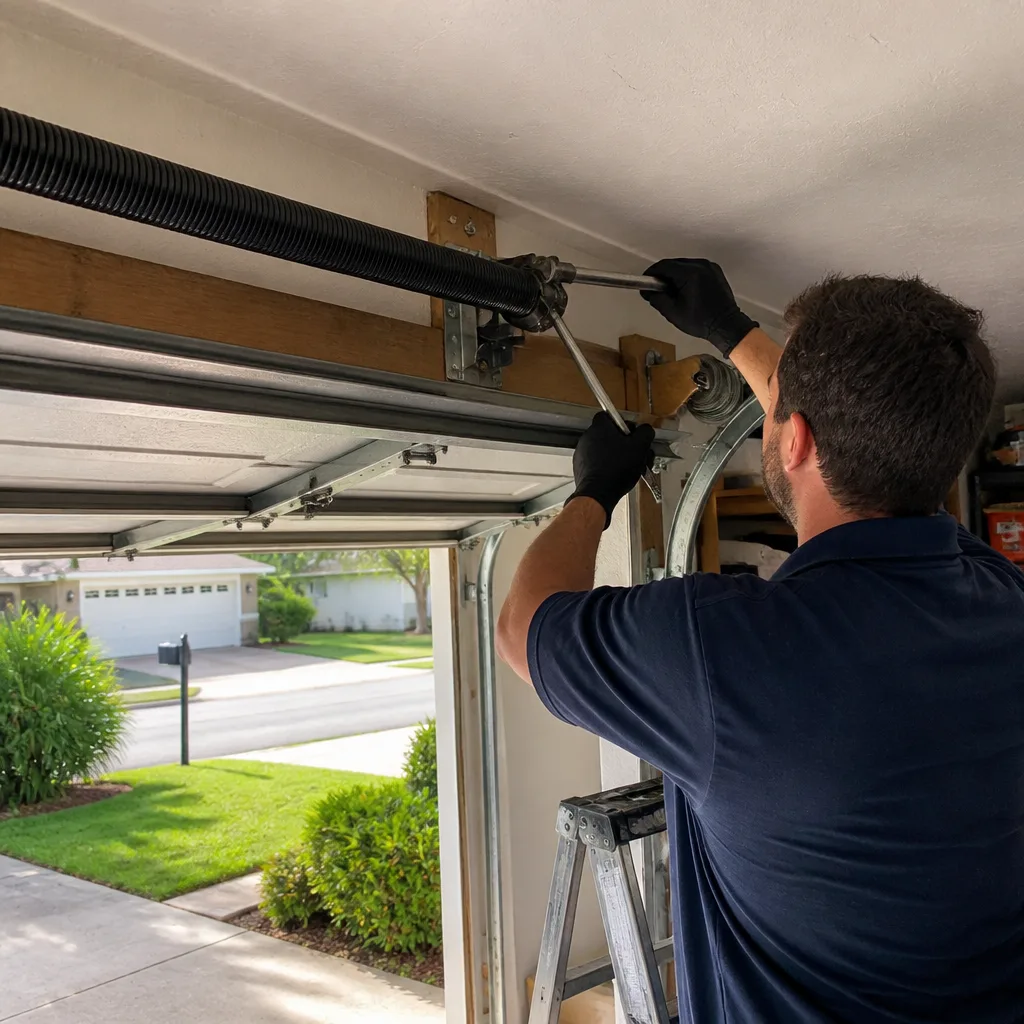
Torsion spring replacement is not a DIY project. The spring holds enormous stored energy under tension. If it releases unexpectedly, the winding bar becomes a projectile capable of causing severe injury or death. Our technicians use hardened winding bars, proper PPE, and a methodical winding sequence that comes from training and repetition.
Cable replacement and track realignment are also professional jobs. Cables run under tension and are connected to the spring system. Removing a bottom bracket without securing the spring can release the entire assembly.
Under Florida law, garage door installation and structural repair work requires a contractor’s license when the job value exceeds $500 or involves structural components. Spring replacement, cable work, and door panel replacement all fall into this category. A licensed contractor also carries the insurance required to protect your home if something goes wrong.
If you’re doing any repair yourself and something feels like it’s fighting you, stop. The right fix, not the easy fix, sometimes means calling Garage Door Repair in Tampa professionals who handle these systems daily.
Tampa’s Seasonal Repair Calendar: What to Check and When
Tampa’s weather follows a rhythm, and garage door failures follow it closely. Here’s what homeowners should do at each point in the year.
March to May: Pre-Hurricane-Season Inspection
- Inspect springs and cables visually. Look for rust discoloration, especially on the coil faces of the torsion springs. Surface rust is normal, but deep pitting or red-brown flaking indicates advanced corrosion.
- Test the door’s balance. Pull the release handle and lift the door manually. It should stay roughly halfway open on its own. If it falls or rises on its own, the springs are losing tension or need replacement.
- Check the bottom seal. Run your hand along the underside of the door. Any visible gaps, cracking, or flattened sections mean water will get in during summer storms.
- Verify the auto-reverse function. The 2×4 test described above. If the door doesn’t reverse, the opener needs repair or adjustment.
- Lubricate moving parts. Springs, hinges, rollers, and the opener rail. This is the single most effective preventive step for Tampa homeowners.
June to October: Wet Season Vigilance
Daily thunderstorms mean the door is cycling more often, and each cycle is a wear event. Water pools on the driveway and splashes onto the bottom panel and seal. Inspect the seal monthly during these months. If water starts appearing on the garage floor near the door, don’t wait until October to address it. A $40 seal replacement now prevents a rusted bottom panel later, and bottom panels are the most expensive single panel on most doors.
Also watch for opener behavior changes: slower operation, grinding sounds, or failure to close fully. Humidity affects the logic board and the motor capacitor, and electrical issues tend to surface during the hottest, most humid weeks.
November to February: Cooler Weather Recovery
Tampa’s cooler months are the ideal window for repairs that require the door to be open for extended periods. Spring replacement, cable replacement, and full track realignment are easier to schedule now, before the rush of emergency calls that hits in spring when doors that weathered the summer start failing under cooler temperatures. Steel contracts slightly in cooler weather, which means weakened springs and frayed cables are more likely to snap between December and February. If your door is showing signs of age, this is the time to address it on your schedule rather than on an emergency basis.
One call at Vintage Garage Door Service home handles the full system, from a squealing roller set to a complete spring and cable refresh.
Brand-Specific Quirks We See Across Tampa Neighborhoods
Garage door brands have personalities. Over years of working in Tampa’s varied housing stock, certain patterns emerge that are useful for homeowners to know.
Older LiftMaster and Chamberlain units in South Tampa and Hyde Park. The bungalows and mid-century homes in these neighborhoods often have openers installed 15 to 25 years ago. LiftMaster’s chain-drive units from that era are workhorses, but the nylon drive gears wear flat, and the capacitor ages out. The fix is usually straightforward: a new gear kit or capacitor, not a new opener. If the unit is a Chamberlain from the same era with a logic board started producing an erratic response to remotes, a board swap often restores full function. We carry these parts on service calls because these brands are common enough in Tampa to justify it.
Newer Chamberlain and LiftMaster smart openers in New Tampa and Westchase. The subdivisions built in the last two decades lean toward Wi-Fi-connected openers with battery backup. These units are generally reliable, but Tampa’s storm-driven power fluctuations can corrupt the Wi-Fi module settings. If your opener’s lights work but the app says it’s offline, a re-pairing procedure usually fixes it. If the battery backup beeps incessantly after a power outage, the battery may need replacement every three to five years.
Genie openers in Carrollwood and Northdale. Genie’s screw-drive units from the 1990s and 2000s are still common in these neighborhoods. The screw-drive mechanism is durable, but the traveler wears down, and when it fails, the door moves in jerks and produces a loud grinding sound. Replacement travelers are inexpensive, but many homeowners are told they need a full opener replacement when a $40 part would do the job. That’s the difference between a brand-agnostic diagnosis informed by experience across multiple manufacturers, and a technician who only knows the brands their company sells.
Clopay, Amarr, and Wayne Dalton doors across Tampa’s housing stock. These three brands account for a large percentage of residential doors in the Tampa metro, and each has its own failure patterns. Clopay’s steel doors from the 2000s are prone to rust at the bottom panel if the seal was neglected. Amarr’s older wooden doors, common in the historic districts, need periodic rebalancing as the wood absorbs and releases moisture with the seasons. Wayne Dalton’s TorqueMaster spring system is a sealed tube design that hides the spring from view, which means homeowners often don’t realize a spring is broken until the door is already damaged. Knowing these quirks means faster, more accurate diagnosis, and that’s what Garage Door Opener Repair in Tampa is built on.
Documenting Storm Damage for Your Insurance Claim
When a Tampa storm damages your garage door, the insurance process works better if you document everything correctly from the first hour. Most homeowners skip steps that later cost them money or delay the claim.
What to do immediately after storm damage
- Photograph everything before moving anything. Wide shots showing the entire door, the driveway, and the surrounding area. Close-ups of every point of damage: bent tracks, dented panels, broken glass, water lines on the wall. Use your phone’s timestamp or enable location tagging.
- Photograph the door in the closed position and in the open position, if it opens at all. If it doesn’t open, photograph the gap where it meets the ground and the angle of any twisting or sagging.
- Document water intrusion separately. Photograph water on the garage floor, wet drywall, damaged stored items, and any mold that appears later. Insurance adjusters need to separate door damage from water damage, and both are claimable under most homeowners’ policies when caused by a storm event.
- Save the weather data. Screenshot a reliable weather report for the exact date and time of the storm. If the storm was named, note that. This establishes the event for the adjuster.
- Get a written repair estimate. Before filing the claim, have a professional inspect the door and document what’s damaged, what caused it, and what repair or replacement is required. Written estimates carry more weight with adjusters than verbal assessments.
A note on spring damage and storms: A torsion spring that snaps during a storm may or may not be storm-related. If the spring was already corroded and nearing the end of its life, the storm was the last straw, not the root cause, and some adjusters will deny that portion of the claim. This is where a professional assessment matters. Our technicians document the condition of the spring and the surrounding hardware, noting whether the failure is consistent with storm force or simple age.
If the door is completely inoperable, secure the garage by bracing the door, disconnecting the opener, and covering broken windows with plywood until repairs can be scheduled. An unsecured garage is an invitation to opportunistic theft after a storm.
What Garage Door Repairs Actually Cost in Tampa
Prices vary by brand, part availability, and the condition of surrounding hardware, but here’s what Tampa homeowners should expect to pay for common repairs in the current market.
- Torsion spring replacement (pair): $180 to $340 installed. Single spring: $120 to $220. The price depends on spring size, wire gauge, and cycle rating. Higher-cycle springs cost more but last longer, and in Tampa, the additional $50 to $80 is almost always worth it given the corrosion environment.
- Bottom seal replacement: $75 to $150 installed, depending on door width and seal type. This is one of the most cost-effective preventive repairs in Tampa.
- Cable replacement (per side): $90 to $180. If one cable fails, the other is usually close behind. We recommend replacing both at once.
- Roller replacement (set of 10 to 12): $120 to $220. Nylon rollers with sealed bearings are the right choice for Tampa’s humidity.
- Opener logic board replacement: $180 to $320, depending on brand. Genie and older Chamberlain boards are often on the lower end; new smart LiftMaster boards on the upper end.
- Opener motor replacement (full unit): $350 to $650 installed, including removal of the old unit. For Garage Door Installation in Tampa, we quote prices before work begins, so you know the number going in.
- Full door replacement (16′ wide steel door, mid-range): $1,200 to $2,800 installed, depending on brand, insulation, and hardware finish. High-end doors from Amarr or Clopay can run higher.
Every quote we give is the price you pay, agreed on before any work begins. If we open the door and find something unexpected, we stop, show you what we found, and re-quote before touching a wrench. No one should get a surprise invoice at the end of a repair call.
Choosing the Right Technician for Your Tampa Garage Door
Garage door technicians are not all the same, and in a market like Tampa, where the climate creates specific challenges, the difference between a generalist and a specialist shows up in the quality and longevity of the repair.
Here’s what to look for:
- Brand-specific training. Ask the company which brands they work on. If the answer is “all of them” but the technician can’t name the drive mechanism in your specific opener, that’s a red flag. Real expertise means knowing that a Genie screw-drive from 2003 has a different failure profile than a Chamberlain belt-drive from 2019.
- Experience with Tampa’s climate. A technician who has worked in this area for years knows that a rusted cable in South Tampa needs different treatment than the same cable in a North Carolina garage. They’ll recommend corrosion-resistant hardware where appropriate, and they won’t sell you a spring rated for a dry climate.
- Willingness to repair, not just replace. Some companies push new openers and new doors because replacement is more profitable than repair. The right technician, facing a failed traveler on an old Genie or a worn gear on a LiftMaster, will tell you the part can be replaced for a fraction of the cost, if that’s genuinely the right call for your situation.
- Transparent pricing. The quote should be specific and in writing before work starts. If a company won’t commit to a price until the work is done, walk away.
Vintage Garage Door Service is trained and experienced on eight of the most widely installed garage door and opener brands in North America: LiftMaster, Chamberlain, Genie, Clopay, Amarr, Wayne Dalton, Craftsman, and Raynor. That breadth matters in Tampa, where housing stock spans a century of door technologies. We know your brand, because we work on all of them.
Common Mistakes to Avoid
- Ignoring a noisy door. A garage door that squeals, grinds, or bangs is trying to tell you something. In Tampa, where components wear faster than average, that noise is often the first sign of a spring or roller about to fail. Addressing it early costs less than the emergency repair that follows.
- Using WD-40 on the door. WD-40 is a water displacer, not a lubricant. It strips away the existing lubricant and leaves surfaces nearly dry. Use silicone spray or white lithium grease instead.
- Continuing to operate the opener with a broken spring. The door is now dead weight, and the opener motor is fighting to lift it alone. That overheats the motor, strips gears, and can bend the door itself. Disconnect the opener and secure the door until repairs are made.
- Replacing only one spring. Springs wear together. Replacing one leaves the door unbalanced, and the new spring will fatigue faster working against the older one. Replace both as a set.
- Filing an insurance claim before getting a professional assessment. A denied claim stays on your record and can affect your premiums. Know what caused the damage and what it will cost to fix before you call the adjuster.
- Choosing a technician based on price alone. Tampa’s garage door market has a wide range of pricing, and the low end often reflects shortcuts: single-spring replacements, cheap imported springs with low cycle ratings, or reused hardware. The right fix costs what it costs, and it lasts.
When to Call a Professional
Some situations require a trained technician, full stop. If your torsion spring is broken, call a professional, not a neighbor with a YouTube tutorial. The stored energy in a wound spring is dangerous enough to cause permanent injury, and the replacement requires specific tools and a precise sequence. If a cable has snapped, the door is under unbalanced tension, and the same risk applies.
If your door is off its tracks, do not attempt to force it back. The weight of the door can shift unpredictably, and pushing it back manually can bend the track further or cause the door to fall. If your opener is not responding to remotes, wall buttons, or the app, the issue could be the logic board, the safety sensors, or the capacitor, and diagnosing it correctly requires opening the unit. If you’ve documented storm damage and need a written estimate for insurance, that assessment should come from someone who works on these systems daily.
Vintage Garage Door Service offers free estimates in Tampa, call (866) 253-5794. We’ll come out, look at the door, tell you exactly what’s wrong and what it will cost, and the price is quoted and agreed before any work starts.
Frequently Asked Questions
Spring replacement in Tampa typically runs $180 to $340 for a pair of torsion springs, including labor. The price depends on the spring size, wire gauge, and whether you choose standard or high-cycle springs. High-cycle springs cost more but last significantly longer in Tampa’s corrosive environment. Call (866) 253-5794 for a precise quote, estimates are free.
Yes, same-day appointments are often available across the Tampa metro area, particularly for spring and cable failures. The earlier you call, the more likely we can get a technician to you that day. If the door is stuck open or the spring has snapped, call (866) 253-5794 and we’ll let you know the soonest available window.
In Tampa’s humidity and salt air, torsion springs should be expected to last 5 to 7 years rather than the 8 to 12 years common in drier climates. The corrosion on the spring coils accelerates fatigue, and springs can fail suddenly even if they look intact from the outside. Annual inspection during the pre-hurricane-season window is the best way to catch a spring before it fails.
It depends on the opener’s age, brand, and failure mode. Many older LiftMaster, Chamberlain, and Genie openers can be repaired with inexpensive parts like gear kits, capacitors, or logic boards, extending their life for years. If the opener is over 20 years old and lacks modern safety features, replacement may be the better long-term call. We’ll tell you the honest answer based on your specific unit, not on what’s more profitable for us.
In most cases, yes. Storm damage to a garage door is typically covered under the dwelling portion of your homeowners policy, subject to your deductible and the terms of your specific policy. The key is documentation: photographs of the damage, evidence of the storm event, and a written repair assessment from a professional. Some policies have separate hurricane deductibles that may apply for named storms.
Check the obvious first: power to the opener, a tripped breaker, or a tripped GFCI outlet. Lightning strikes near the house can damage the opener’s logic board even if power is reaching the unit. If the opener lights are on but nothing moves, the board may need replacement. If the door opens manually but the opener won’t move it, the problem is electrical. Call (866) 253-5794 for a diagnosis, quotes are free.
The Bottom Line
Tampa’s garage doors work harder than doors in most of the country, fighting salt air, humidity, daily summer storms, and the occasional hurricane. That means springs corrode faster, cables fray sooner, seals degrade quicker, and openers take more electrical abuse. The difference between a $90 repair and a $900 replacement often comes down to catching the warning signs early and acting on them. That’s the point of this guide: a seasonal rhythm of inspection and maintenance, an honest understanding of what you can fix yourself and what you shouldn’t touch, and a clear picture of what repairs cost in this market. When you need a professional, the right technician knows your brand, quotes the price up front, and stands behind the work.
Need a repair or a no-pressure estimate in Tampa? Call Vintage Garage Door Service at (866) 253-5794. One call covers the full system: door, opener, springs, cables, and track. We’ll tell you what’s wrong, what it costs, and the price you agree to is the price you pay. Free estimates, no surprises.
Written by the team at Vintage Garage Door Service, serving Tampa since 2012.
See the difference
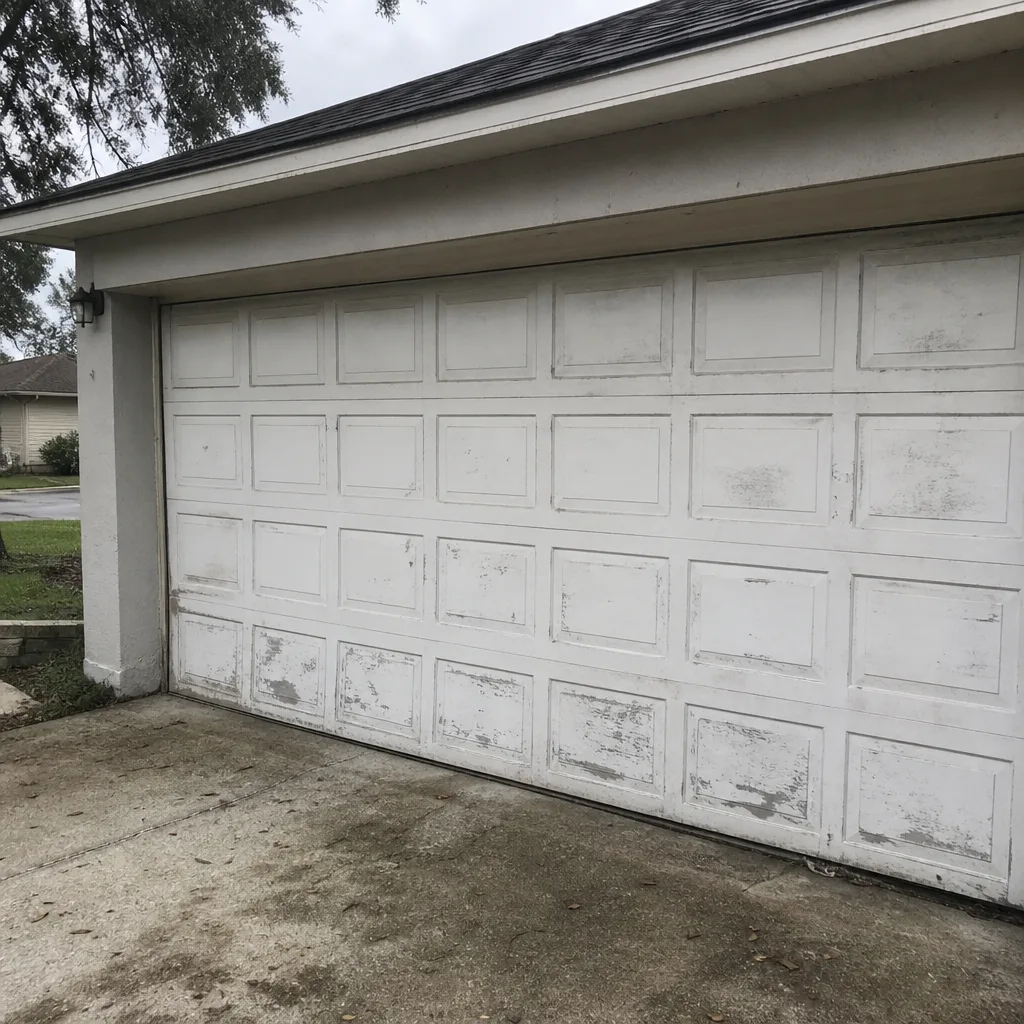 Before
 After
 Before
 After
 Before
 After