

Last updated October 31, 2026
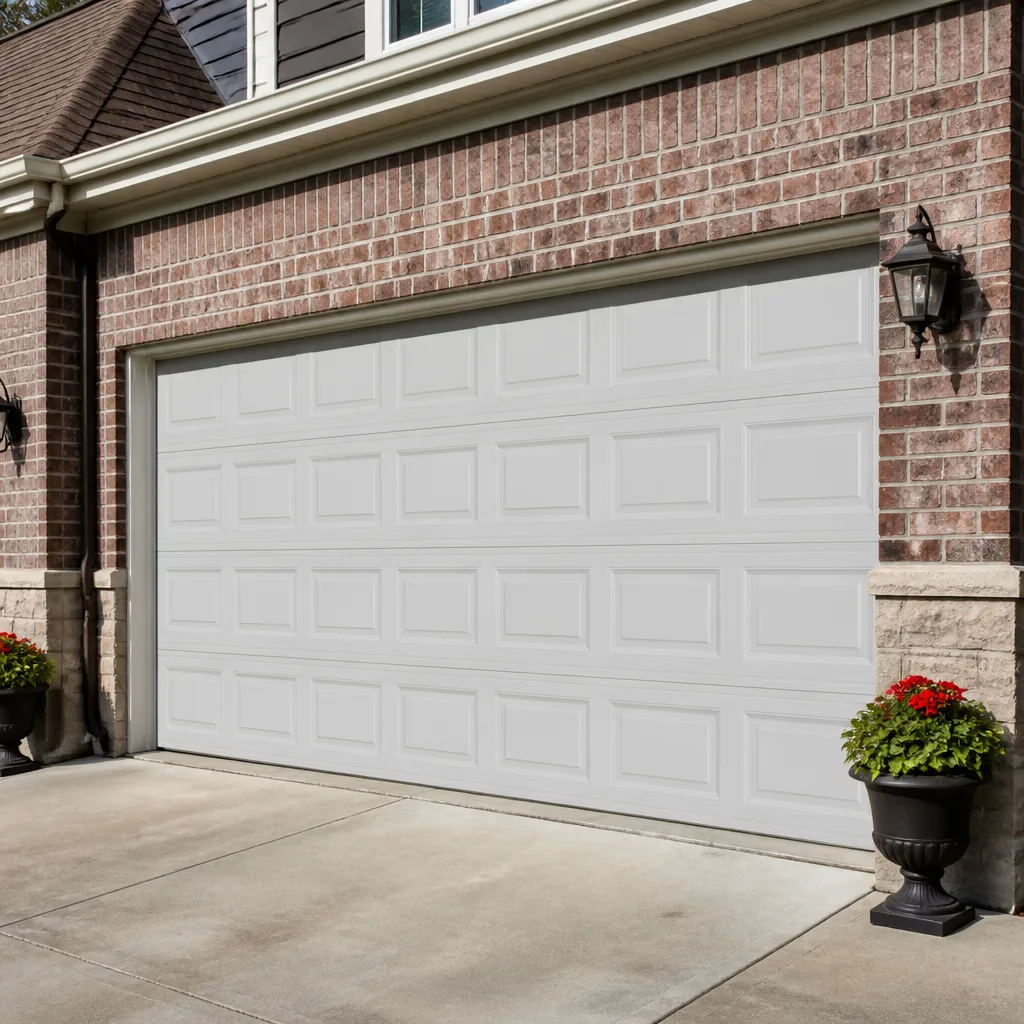 Raised-panel steel
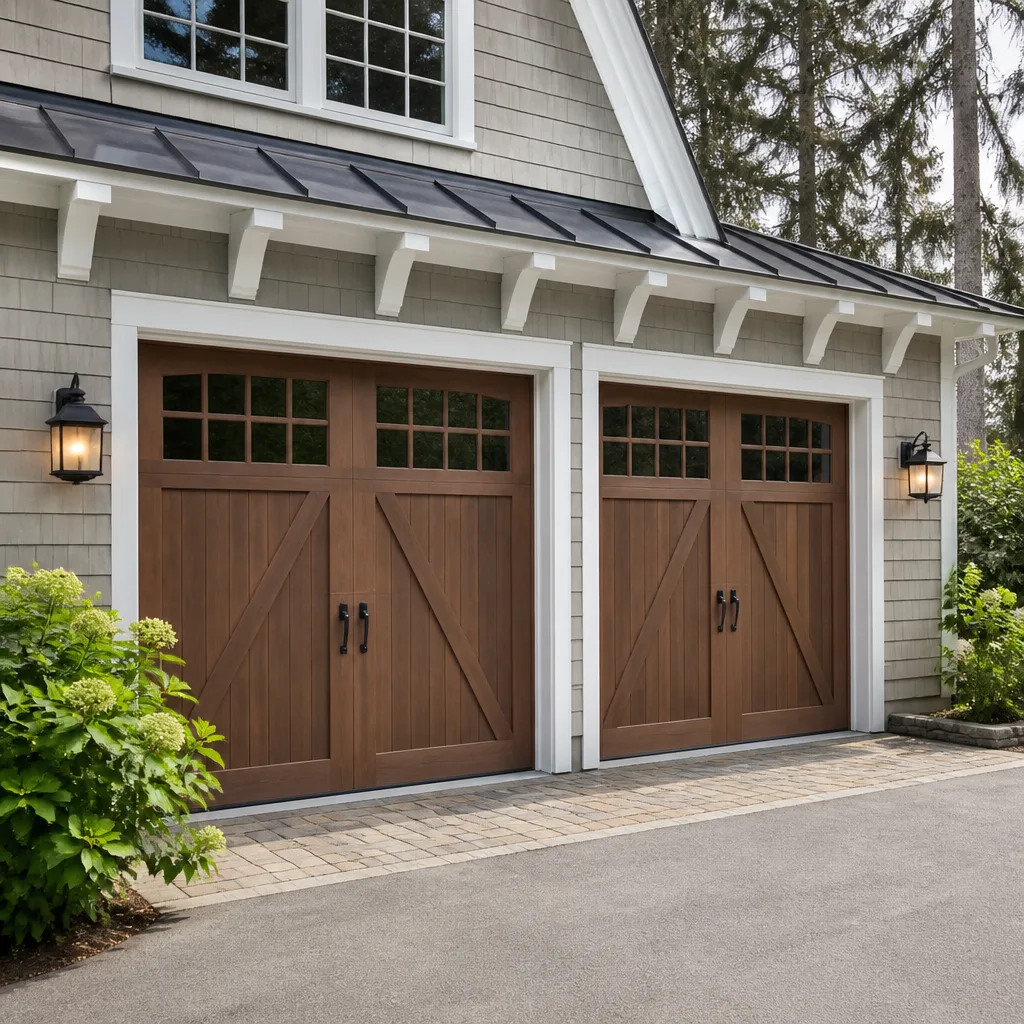 Carriage house
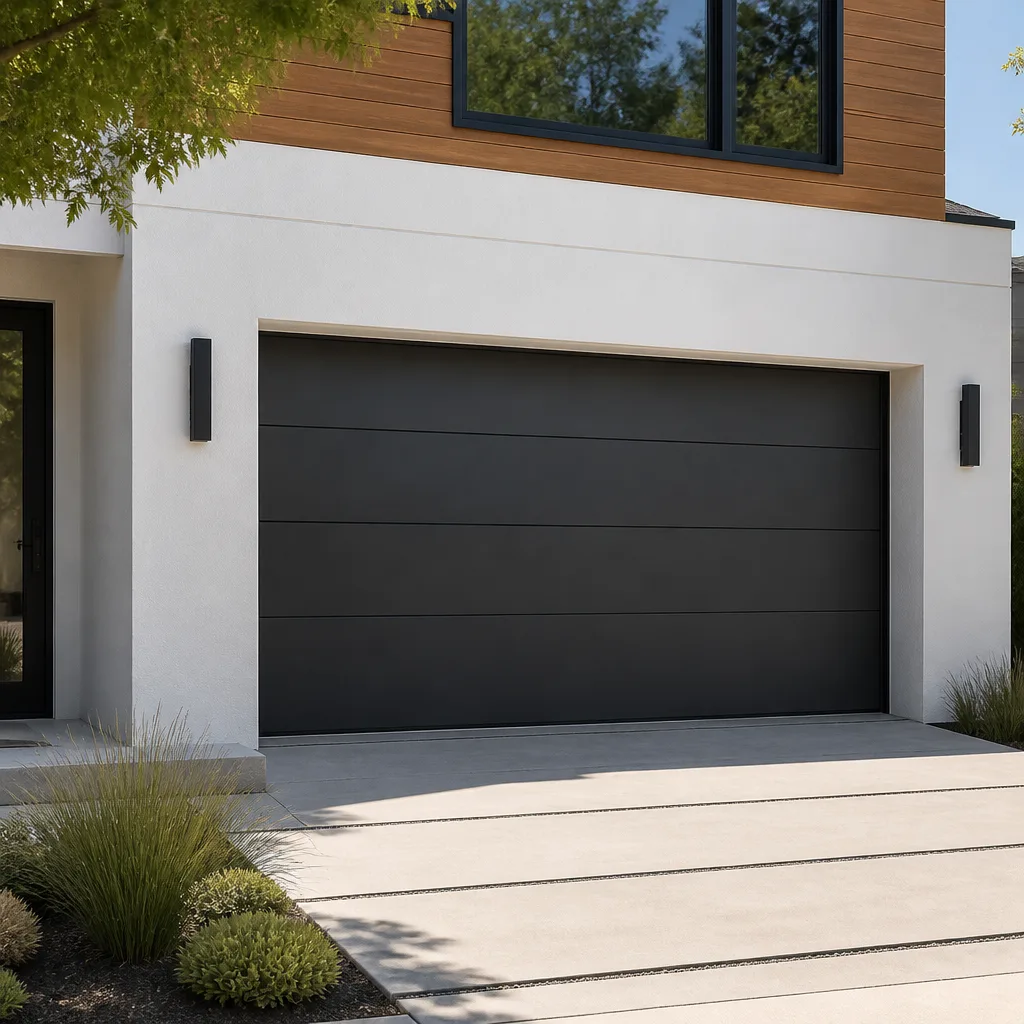 Modern flush
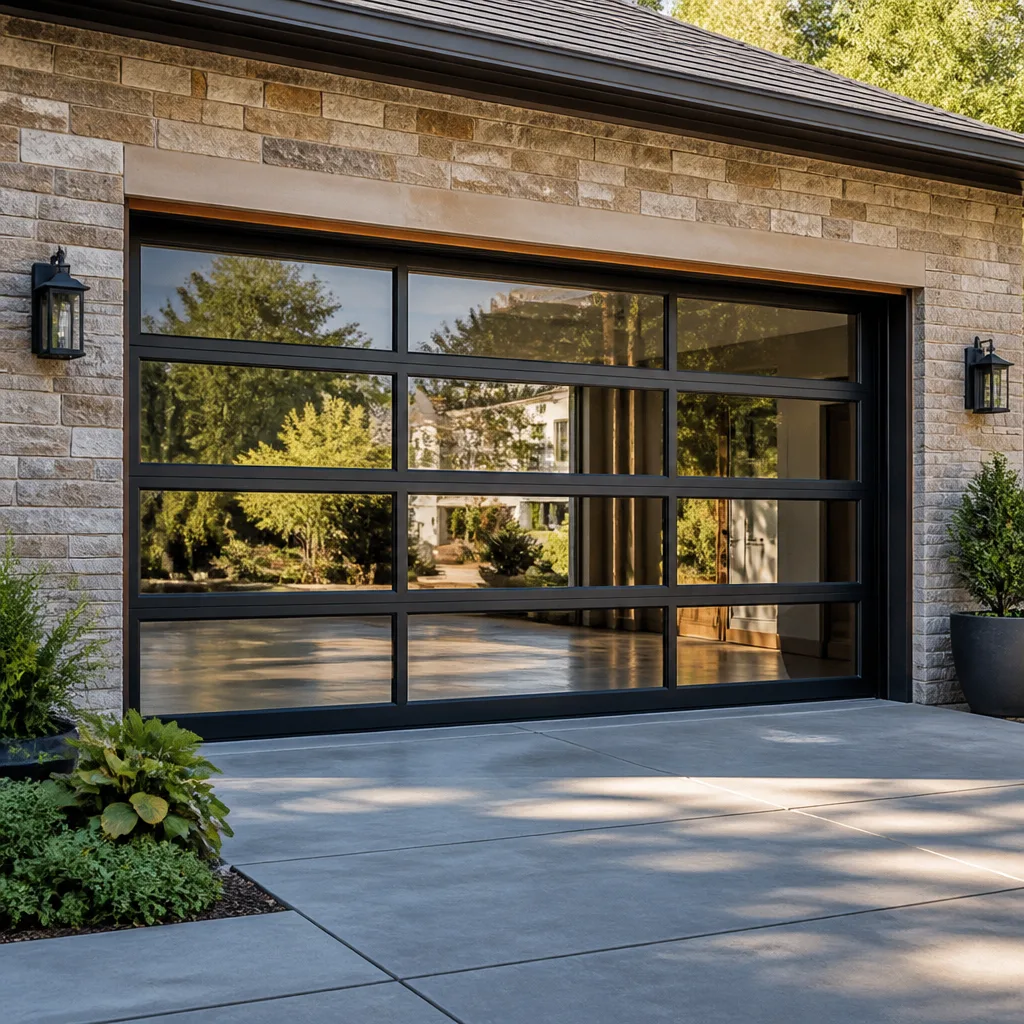 Full-view glass
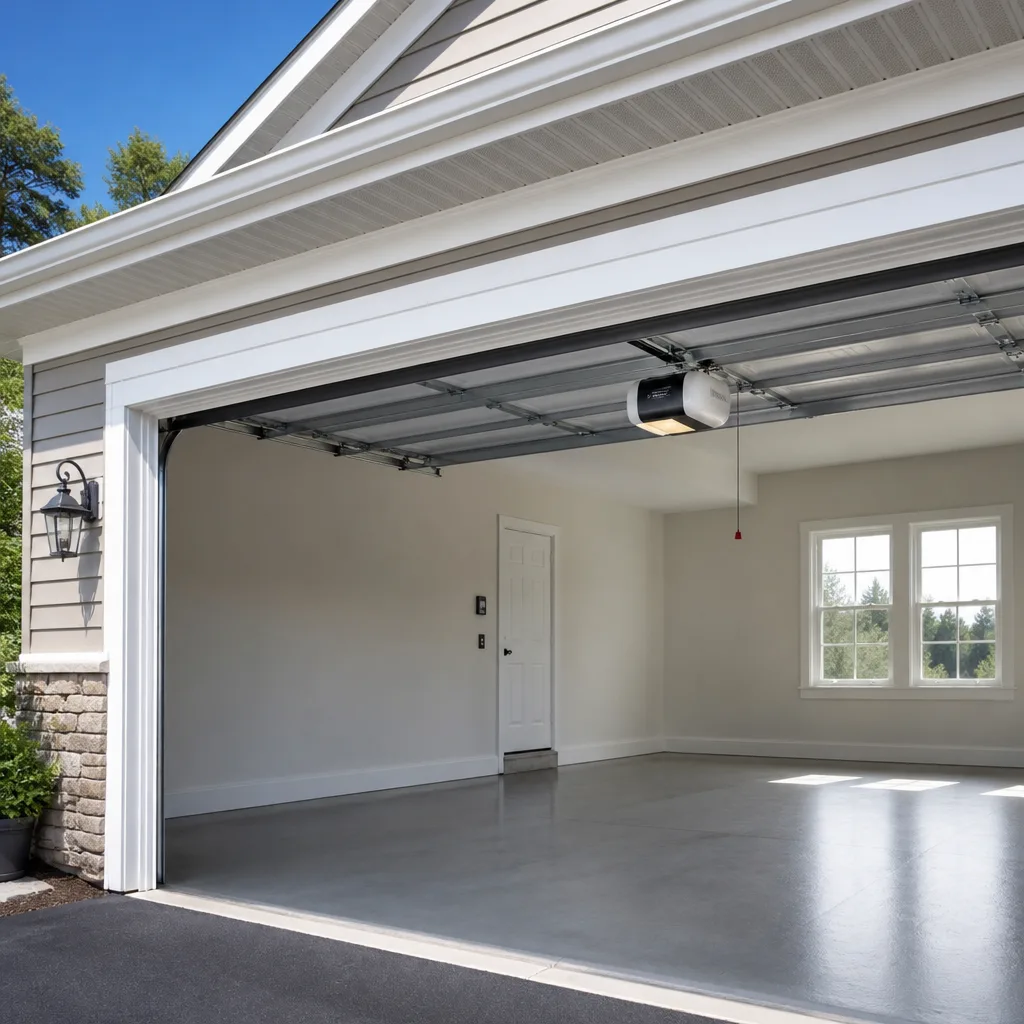 LiftMaster openers
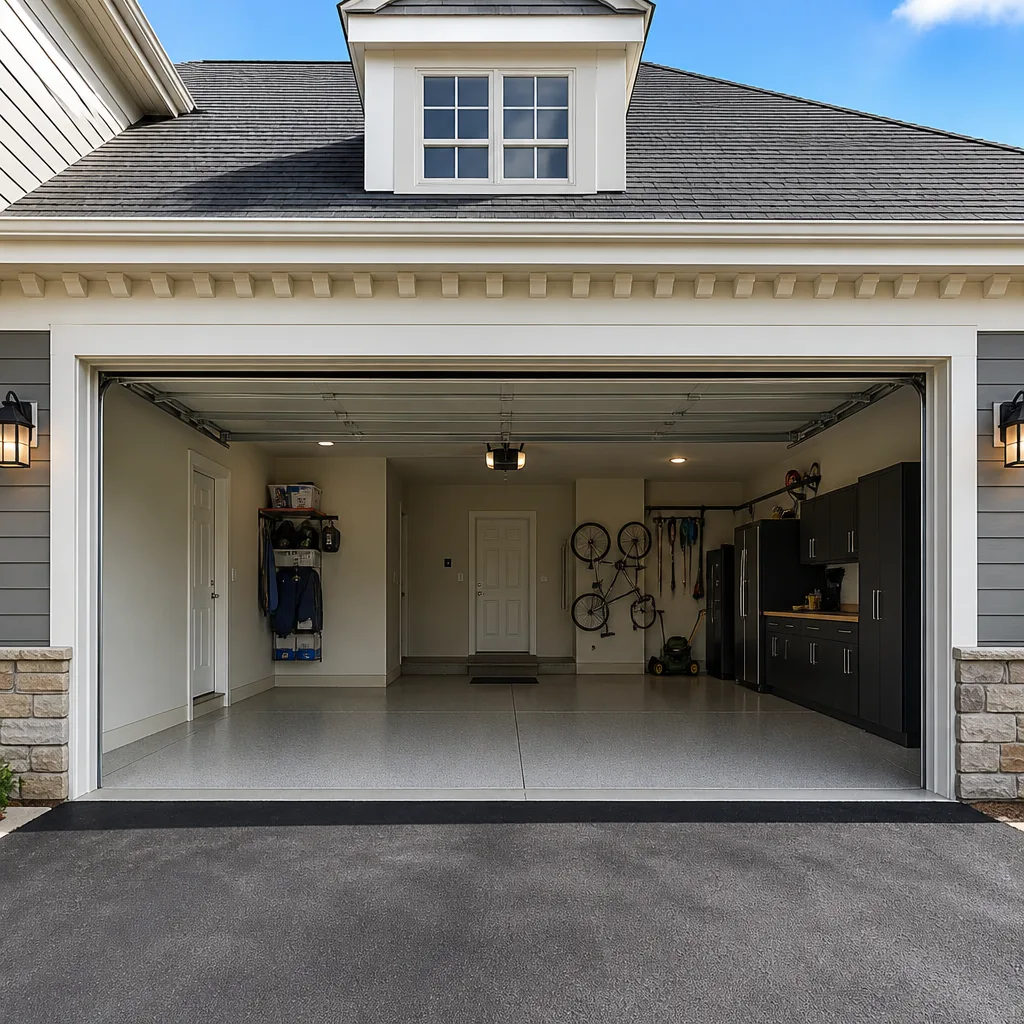 Chamberlain openers
Full 25-point door and opener safety check with every visit - springs, cables, rollers, tracks, and your LiftMaster or Chamberlain opener included
You get a price before we start. It does not change when the truck arrives.
Get your free estimateThe Complete Guide to Garage Door in Tampa
Most Tampa homeowners replace their garage door based on looks alone, then spend the next decade fighting humidity warping, salt-air corrosion, and openers that can’t handle the heat – all problems a 20-minute local-aware decision would have prevented. Here’s the thing: a garage door isn’t a single product. It’s a system of interdependent parts that all respond differently to Tampa’s specific climate. This guide walks you through every component, every decision point, and every local code requirement most national websites don’t know exists, and you can find more guides & resources on our blog. By the time you finish reading, you’ll understand your garage door better than most salespeople who quote it.
Quick Answer
A garage door in Tampa is a system of five components – panels, tracks, springs, opener, and weatherstripping – that must each be chosen for Florida’s humidity, salt air, and wind-load codes. The right door for a Tampa home balances material durability (fiberglass or reinforced steel for coastal areas, standard steel inland), a properly sized opener rated for 90°F+ attic heat, and compliance with the Florida Building Code’s wind-load requirements for Hillsborough County. Most residential jobs in Tampa run between $1,200 and $3,800 installed depending on material, size, and opener type—see our Garage Door Cost Breakdown: The Tampa Homeowner’s Reference for 2026 for full details.
Styles & brands we work with
Table of Contents
- How Tampa’s Climate Changes Your Door Decision
- The Garage Door Is a System, Not a Product
- Materials: What Actually Holds Up in Florida
- Wind-Load Requirements in Hillsborough County
- Openers: Heat, Humidity, and Horsepower
- HOA Rules in Tampa That Quietly Disqualify Doors
- Lifecycle Cost: The $900 Door vs. the $1,800 Door
- A Maintenance Schedule That Works in This Climate
How Tampa’s Climate Changes Your Door Decision
Tampa sits in a subtropical climate zone that punishes garage doors in ways a national buying guide will never mention. Three specific conditions matter here more than anywhere north of Lake Okeechobee.
First, the humidity. Tampa averages 70 – 80% relative humidity year-round, with summer dew points routinely above 75°F. Steel garage doors hold up fine if the paint finish and insulation bond are intact. But any scratch that exposes bare metal will start surface-rusting within weeks, not months. We’ve pulled 8-year-old steel doors in Carrollwood that looked brand new on the outside and had rust blooming along the bottom edge where the weatherstripping held moisture against the panel.
Second, salt air. Homes within about three miles of Tampa Bay or the Gulf coastline carry measurable salt in the air, especially during summer onshore flow. That salt accelerates corrosion on exposed steel hardware: hinges, roller brackets, spring coils, and the opener rail. In South Tampa, Westchase, and Town ‘n’ Country, we recommend stainless steel hardware and a coated torsion spring as standard practice, not an upsell.
Third, the heat. Your garage attic space can reach 120°F in August. That heat bakes the opener’s circuit board, degrades belt material faster, and makes springs cycle through more stress than the national average lifespan charts assume. A spring rated for 10,000 cycles might net you 7 – 8 years in Tampa unless you upgrade to high-cycle springs.
The practical takeaway: material and hardware choices that work fine in Atlanta or Nashville will underperform here. Buy for Tampa’s climate first, aesthetics second.
The Garage Door Is a System, Not a Product
Here’s the mental model most homeowners never get: your garage door is five interdependent components that either work together or fail together. Replace one part in isolation and you’ve usually just moved the problem.
The five components:
- Panels – the visible door sections. They carry the weight and define the look. They also set the insulation value and wind resistance.
- Track and rollers – the guidance system. Bent or misaligned track wears rollers, which loads the opener motor unevenly.
- Torsion springs – the counterbalance. These do the actual lifting; the opener only guides the movement. Springs wear predictably and fail suddenly.
- Opener – the motorized brain. It assumes the door is balanced and the track is clean. A struggling opener is usually the victim, not the cause.
- Weatherstripping and seals – the climate defense. Bottom seal, side seals, and top seal keep Tampa’s humidity, rain, and insects out.
When one component fails, it often damages another. A broken spring makes the door too heavy for the opener, which burns out the gear. A warped bottom panel drags on the track, which bends the vertical rail. That’s why we diagnose the whole system, not just the part making noise. It’s also why a complete garage door installation in Tampa sometimes costs less over five years than patching an old system piece by piece.
Materials: What Actually Holds Up in Florida
National buying guides rank materials by looks and insulation. Tampa buyers should rank them by corrosion resistance first, then insulation, then aesthetics. Here’s how the four main options actually perform in Hillsborough County.
Steel is the default choice and for good reason. Modern steel doors carry a 25-year galvanized base with a factory paint finish. Inland Tampa areas (New Tampa, Lutz, Temple Terrace) get excellent service life from steel. Steel holds insulation well and takes wind-load reinforcement cleanly. The limitation is exposed edges and scratches: once the coating is breached, Florida humidity takes over.
Fiberglass is the sleeper pick for coastal Tampa. It won’t rust, doesn’t absorb water, and shrugs off salt air. The tradeoff: fiberglass panels can yellow over a decade and can’t match steel’s structural stiffness without reinforcement. For a Westshore or Palma Ceia home within a few miles of the bay, fiberglass over a steel frame is a genuinely smart buy.
Aluminum frames with glass or composite inserts are popular for modern builds in Hyde Park and South Tampa. Aluminum won’t rust but dents more easily than steel and conducts heat readily. Full-view aluminum doors look sharp but need stronger openers because of the weight.
Wood is the honest conversation. A solid wood carriage door looks stunning for about three years in Tampa, then the humidity starts warping stiles and the bottom panels swell. Unless you’re committed to a biennial refinishing schedule and have a covered, shaded exposure, skip wood. Engineered wood with a heavy factory seal lasts longer, but steel and fiberglass outperform it in this climate.
For most Tampa homes, the realistic shortlist is reinforced steel for inland neighborhoods and fiberglass or coast-rated steel for bay-front and west-of-Dale-Mabry locations.
Wind-Load Requirements in Hillsborough County
The Florida Building Code sets wind-load requirements for garage doors, and Hillsborough County is in a high-velocity hurricane zone. This is not an optional upgrade – it’s code for new installations and a smart safety upgrade for replacements.
What the requirement means in practice:
- Your door must be rated for the specific wind speed zone of your address. Most of Tampa falls into the 140 – 170 mph design wind speed range depending on exposure.
- The rating is a system certification, not a panel rating. That means the door, track, hinges, and mounting hardware must be tested and approved as a unit. You can’t bolt a wind-rated panel onto standard track and claim compliance.
- Wind-load doors use heavier gauge steel, reinforced horizontal struts, and deeper track mounting brackets. They cost $300 – $700 more than a non-rated equivalent.
- When you pull a permit for a new installation in Tampa city limits, the inspector will verify the door’s design pressure rating matches your home’s wind zone.
If your current door predates the modern code or was installed without a permit, a garage door repair in Tampa job is often the right time to add wind-load struts and upgrade the track hardware. It’s one of the few improvements that genuinely protects your home’s envelope during a storm – a garage door that blows in pressurizes the house and can lift the roof.
Openers: Heat, Humidity, and Horsepower
The opener is the most abused component in a Tampa garage system, and most failures trace back to three local factors: heat, power quality, and homeowner misuse. Choosing the right unit matters more than the brand decal on the cover.
Heat is the silent killer. Opener circuit boards sit in a housing that bakes all summer. Budget units with minimal heat shielding and small cooling vents fail sooner. Genie and Chamberlain both manufacture models with better thermal management than their entry-level lines. We install far more LiftMaster units in Tampa specifically because their DC motors run cooler and their boards are potted against moisture. Heat also degrades belt tension sensors and can cause phantom reverses – the door starts closing, then snaps back up.
Humidity attacks the wiring and connectors. Oxidation on the safety sensor terminals causes intermittent “door won’t close” faults that drive homeowners crazy because the problem comes and goes with the weather.
Horsepower sizing should follow door weight, not square footage. A single-car steel door runs fine on a 1/2 HP opener. A double or triple-layer insulated door, or a heavy wood-look door, wants 3/4 HP or higher. Undersized openers run hot and wear out gears in two to three Tampa summers. If your opener struggles, the fix might be garage door opener repair in Tampa, not replacement – but only if the original sizing was right.
One more local quirk: Tampa’s frequent summer thunderstorms and lightning strikes can fry opener logic boards even through a surge protector. If your opener dies after a storm, check the outlet and circuit first, but expect the board to be the casualty.
HOA Rules in Tampa That Quietly Disqualify Doors
This is the section national guides skip entirely, and it costs Tampa homeowners real money. Many Hillsborough County HOAs and deed-restricted communities maintain architectural review powers that extend to garage doors. Installing the wrong style means a demand letter and a redo at your expense.
What to check before you buy:
- Color restrictions. Some communities like West Meadows and parts of FishHawk Ranch restrict door colors to earth tones that match the facade. A bright white door on a beige stucco house can violate the covenant.
- Panel style bans. Certain HOAs prohibit specific panel profiles. Raised panels are usually fine. Full-view glass or modern flush panels get rejected in traditional communities.
- Window insert rules. Door windows matter. Some associations require window inserts to be frosted or match the home’s window mullion pattern. Clear glass often fails review.
- Front-facing door rules. If your garage faces the street, the review is stricter than for side- or rear-entry garages. Some newer developments in Brandon and Riverview require carriage-door styling on street-facing openings.
- Submission timing. Most HOAs need 14 – 30 days to approve an architectural modification. Factor that into your project timeline. An installer who pulls a permit without HOA approval can leave you holding a door that has to come down.
If your community has a management company, call them and ask for the architectural guidelines before you shop. It’s a five-minute step that prevents a $2,500 mistake.
Lifecycle Cost: The $900 Door vs. the $1,800 Door
Every Tampa homeowner wrestles with this decision. Here’s the math most people never run, using realistic local numbers.
The $900 door is typically a non-insulated, single-layer steel panel with standard hardware, a base spring, and a budget opener package. Over 15 years in Tampa conditions, expect:
- One spring replacement at year 6 – 8: $250 – $350
- One opener replacement at year 7 – 10: $350 – $500
- Weatherstripping replacements every 3 years: $90 per replacement, roughly $450 total
- Rust remediation or panel corrosion repair around year 10: $200 – $400
- Higher cooling cost if the garage is conditioned or adjacent to living space: $30 – $60 per year, roughly $450 – $900 total
Realistic 15-year total: $2,700 – $3,500 beyond the original $900 purchase.
The $1,800 door is typically a double-layer or triple-layer insulated steel panel with high-cycle springs, stainless hardware, and a DC-motor opener. Over the same 15 years:
- High-cycle springs rated for 20,000 – 30,000 cycles: likely no replacement needed
- DC opener with thermal protection: typically 12 – 15 years of service
- Bottom seal replacements every 4 – 5 years: $120 total
- No corrosion work if maintained
- Insulation value reduces garage heat gain noticeably
Realistic 15-year total: $1,800 – $2,300, mostly the purchase price.
The cheaper door costs almost twice as much over its life. That’s the Tampa-specific math: our climate compresses lifespans on budget hardware. The old-school way – buy decent quality once, maintain it, replace it only when truly worn out – costs less. That’s the entire philosophy behind how we approach Vintage Garage Door Service home work. The right fix, not the easy fix.
A Maintenance Schedule That Works in This Climate
Garage door maintenance in Tampa is not optional. The humidity and heat mean small issues compound faster than in drier climates. Here’s a schedule that takes under 30 minutes per task and prevents most major failures.
Every 3 months:
- Visually inspect the spring assembly. Look for rust, gaps in the coil, or a door that struggles to stay at half-height when released.
- Check the bottom weatherstripping for cracks or hardening. Florida sun and humidity break down rubber compounds quickly.
- Clean the safety sensor lenses with a dry cloth. Dust and bug residue accumulate fast in Tampa garages.
- Test the auto-reverse by placing a 2×4 flat on the floor under the door path. The door should reverse within 2 seconds of contact. If not, call a professional – this is a safety system, not a convenience.
Every 12 months:
- Lubricate rollers, hinges, and the torsion spring with a silicone-based lubricant. Do not use WD-40 – it’s a solvent, not a lubricant, and will strip protective coatings.
- Inspect the track for rust, bends, or loose mounting bolts. Coastal Tampa homes should do this twice a year.
- Run the opener through a full cycle with the door disconnected to identify unusual motor noise before it becomes a failure.
- Check the emergency release cord for fraying and test that it disengages smoothly.
Two safety notes. Torsion springs are under hundreds of pounds of tension – inspecting them is safe, touching them with tools is not. And at the first sign of a fraying cable or a door that shakes on one side, stop using it and schedule service. The consequences of a cable snapping mid-cycle are serious.
Common Mistakes to Avoid
- Choosing a door without checking the HOA architectural guidelines. In deed-restricted Tampa communities, a beautiful new door can fail review and need replacement at the homeowner’s expense. The five-minute phone call saves the $2,500 do-over.
- Replacing the opener when the springs are the problem. A door that won’t lift is usually a failed spring, not a dead motor. Replacing only the opener leaves the same broken spring in place, and the new motor will burn out fighting it.
- Skipping wind-load rating to save $400. In Hillsborough County’s hurricane zone, a non-rated door is a structural vulnerability that can cost far more than the upgrade if a storm finds it.
- Lubricating with the wrong product. WD-40 and penetrating oils strip away the grease that rollers and springs need. Silicone spray is the right tool; anything else accelerates wear.
- Painting over rust without treating it. Rust on a Tampa garage door is active corrosion. Sanding and painting the surface leaves the oxidation underneath to spread. The metal needs treatment or the panel needs replacing.
- Ignoring a door that shakes or moves unevenly. That’s a failing spring or a fraying cable. The fix is $300 today or $1,500 after the failure causes secondary damage.
- Buying the opener based on brand name alone. The installation and sizing matter more than the logo. A top-tier LiftMaster unit on a poorly balanced door will still fail early.
See the difference
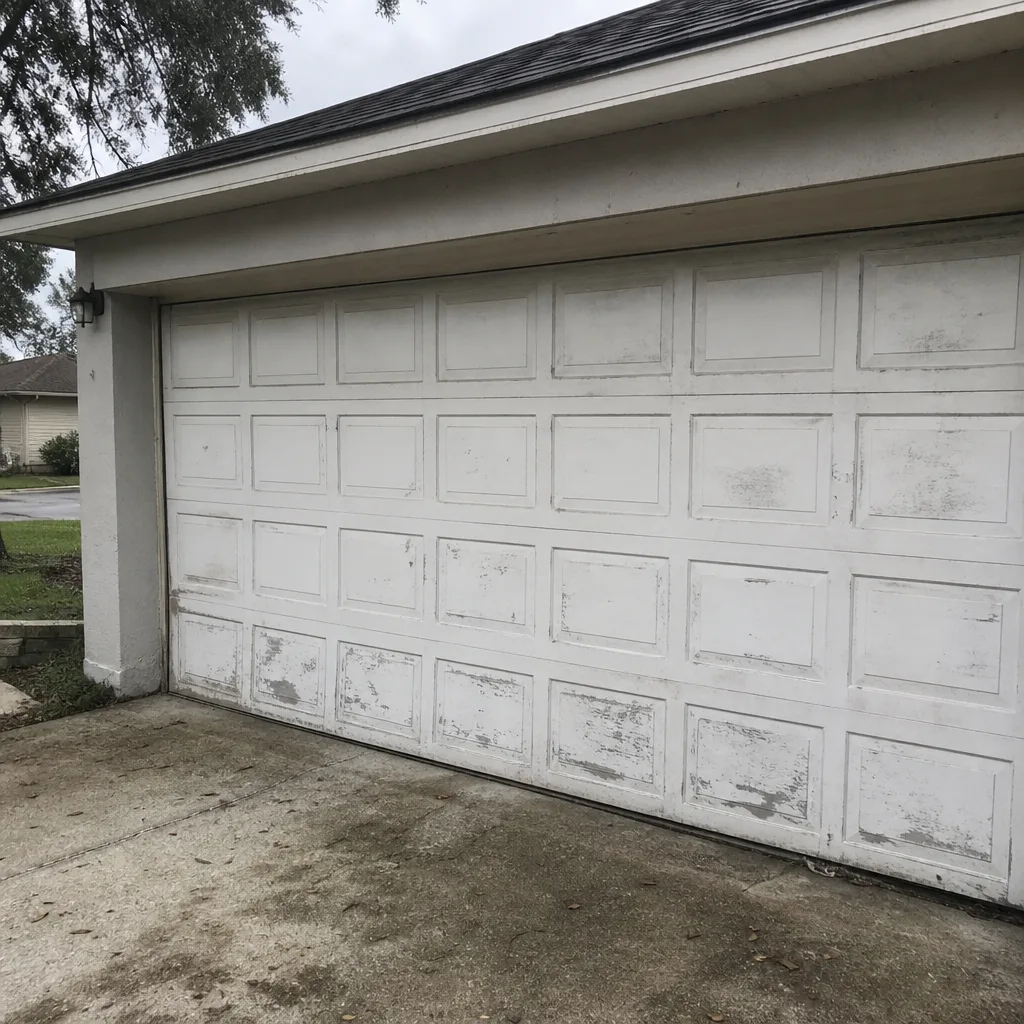 Before
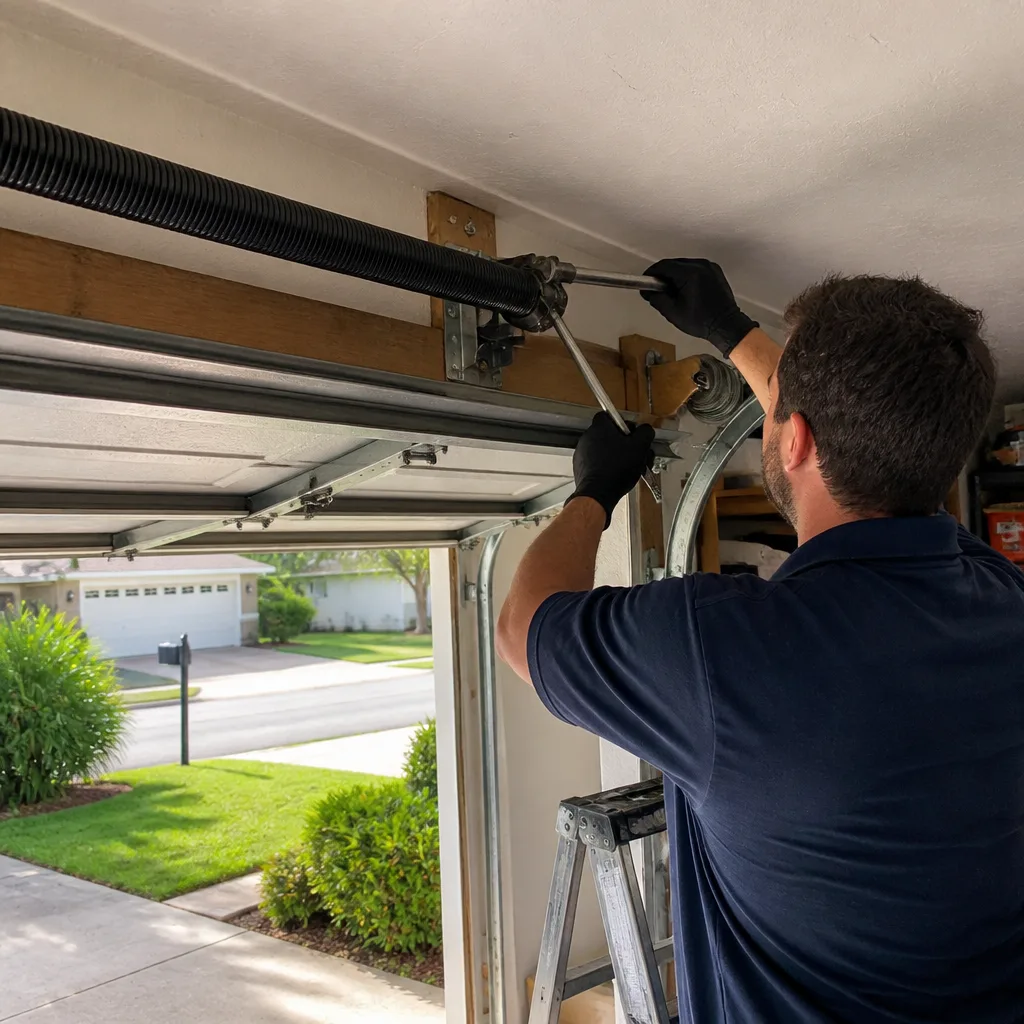 After
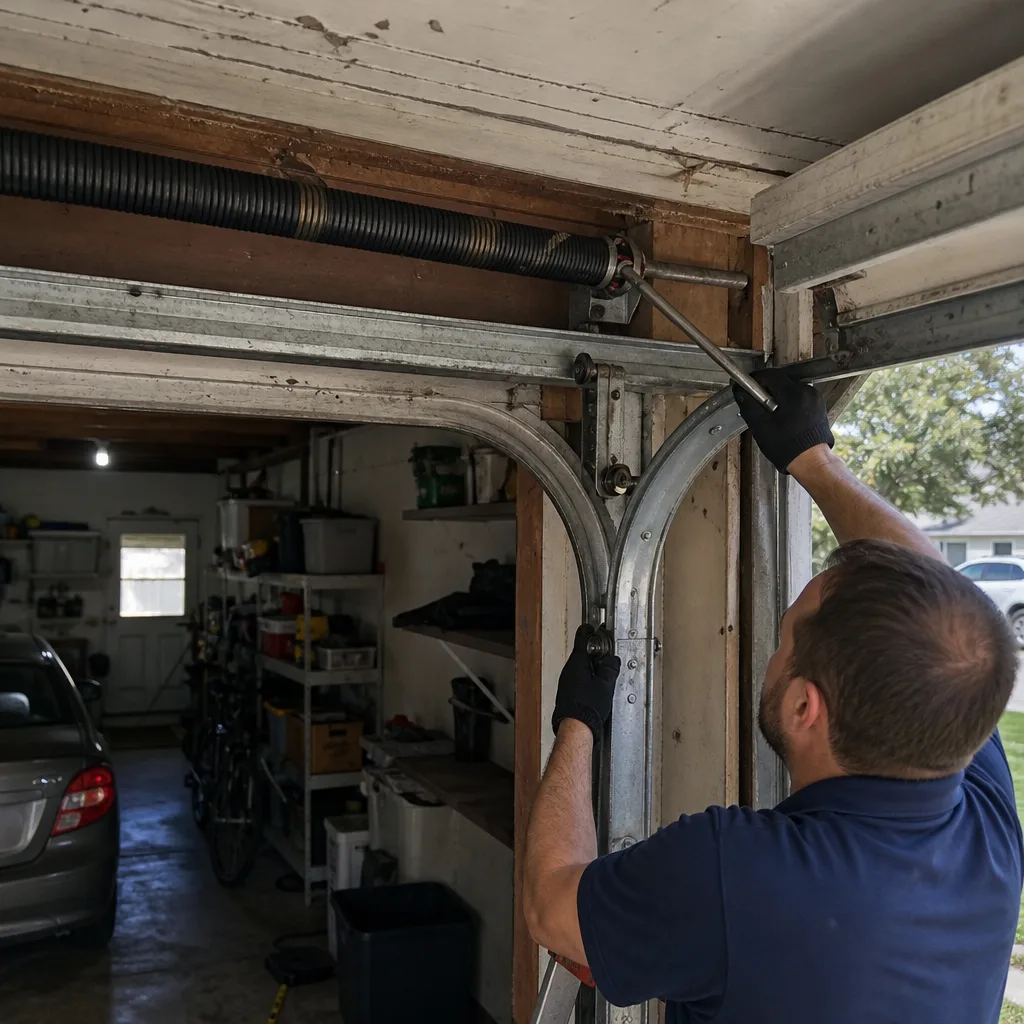 Before
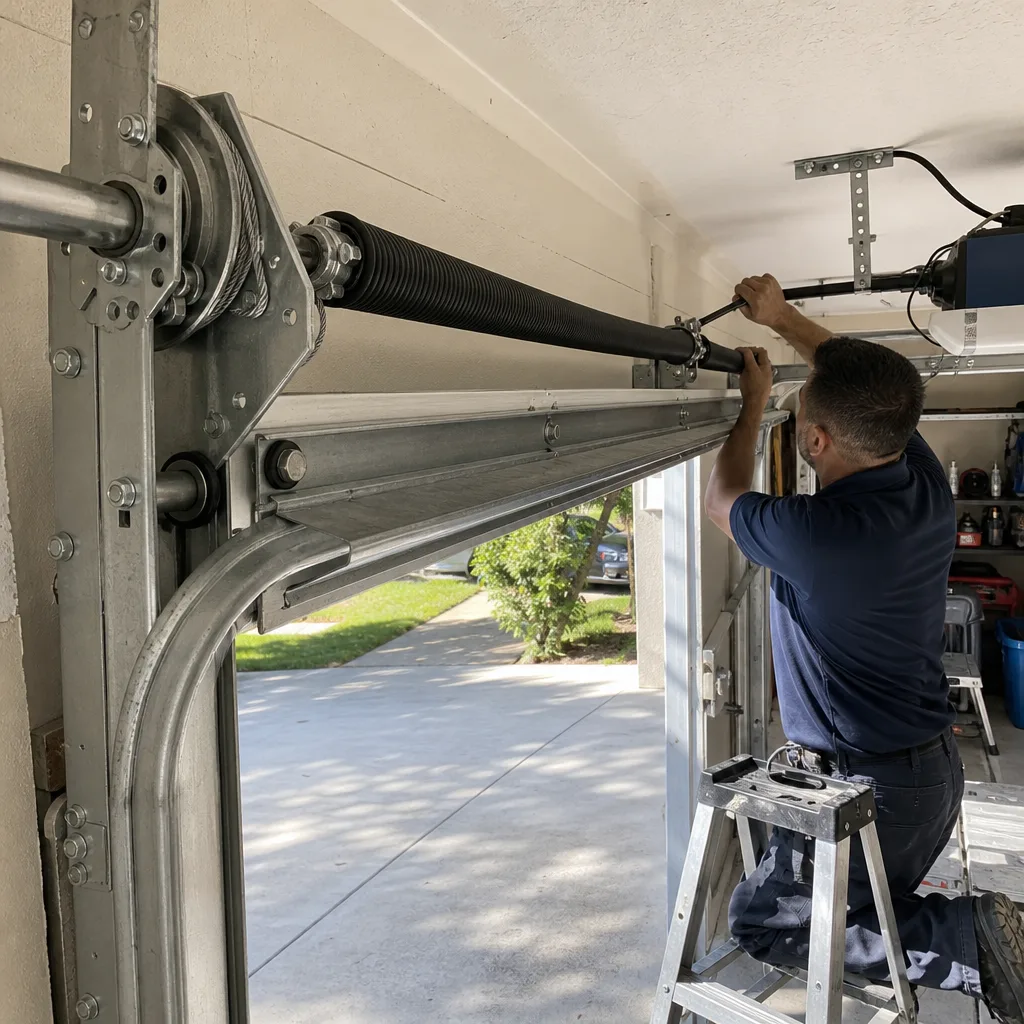 After
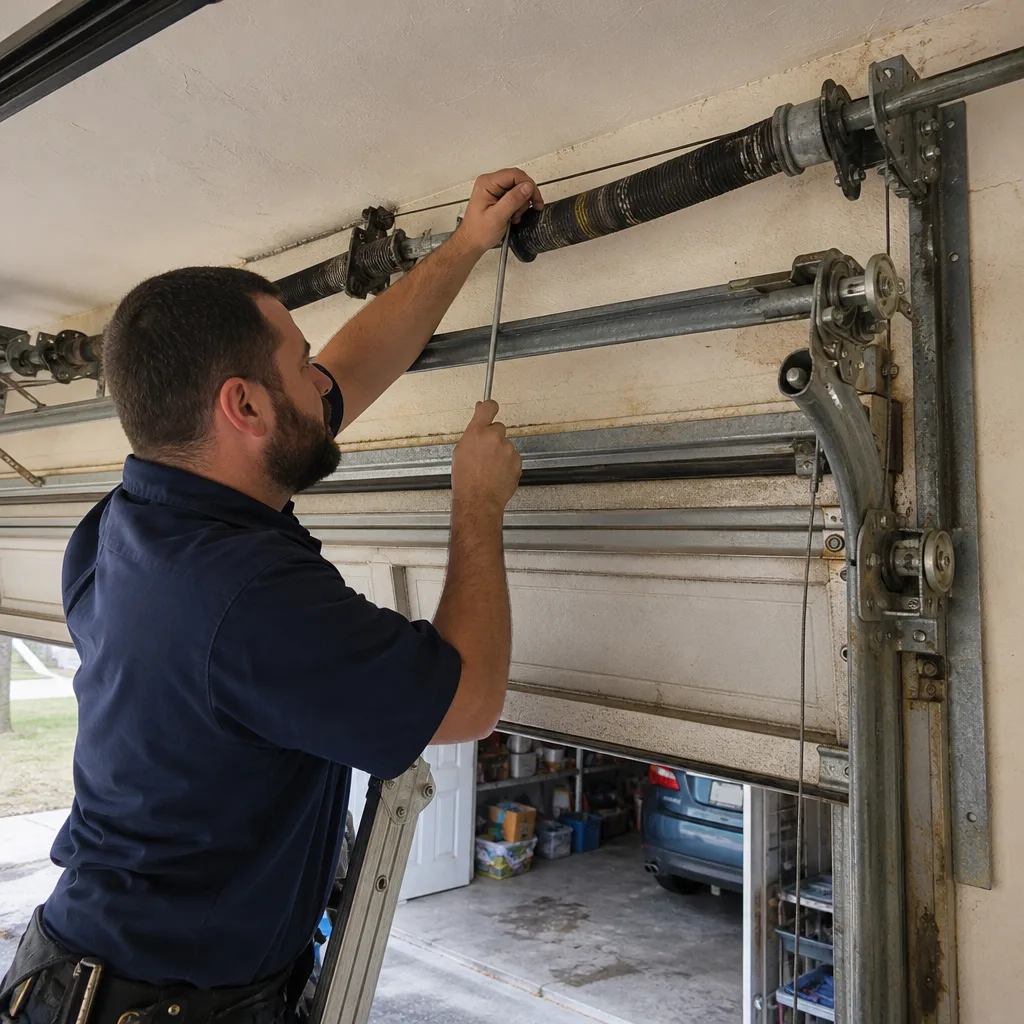 Before
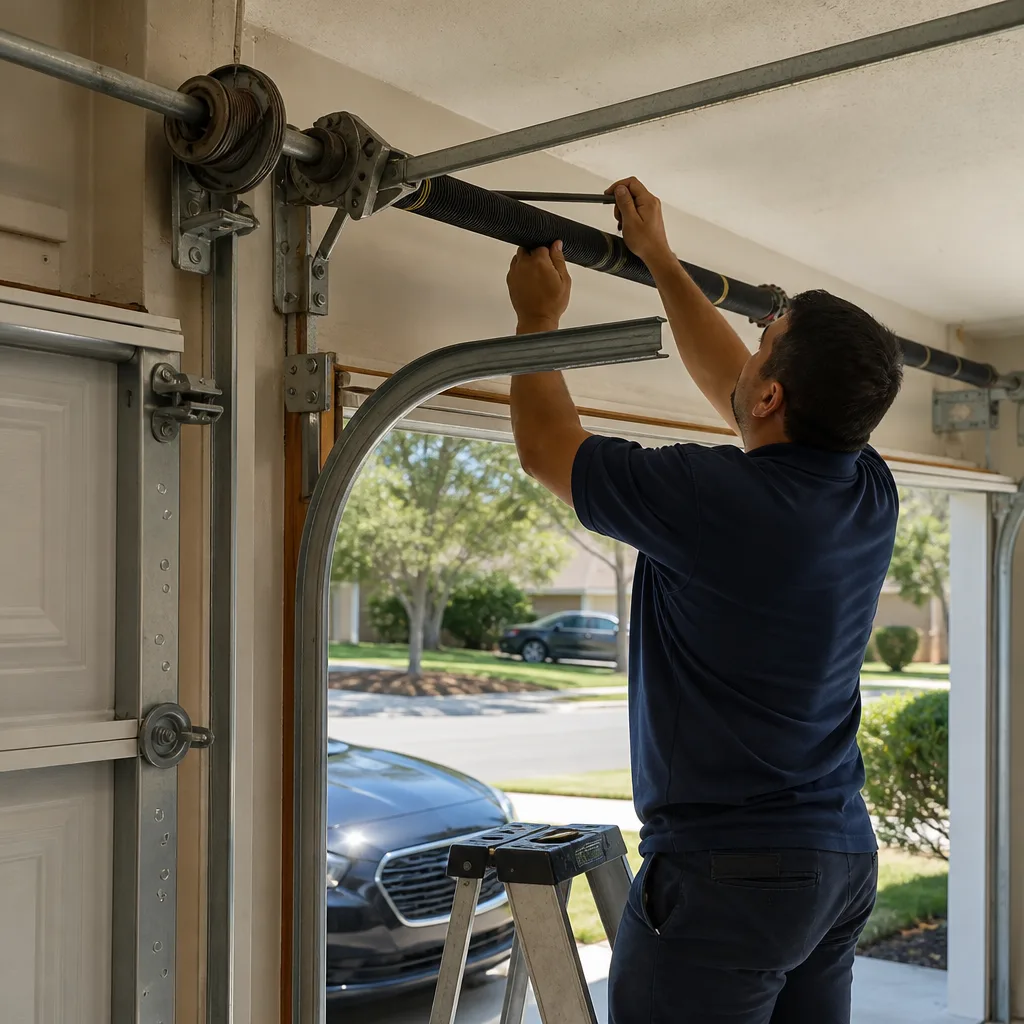 After
When to Call a Professional
Some garage door work is genuinely dangerous to DIY, and the line isn’t always obvious. Torsion springs store enough energy to cause serious injury if mishandled. Cables under tension can lash. A door off its track is heavy enough to crush. If you see a broken spring, a frayed cable, or a door that’s come off its rollers, leave it alone and call a pro same day—our Garage Door Emergency Preparedness Guide for Tampa Homes explains what to do while you wait.
The less dramatic calls matter too. An opener that only works intermittently, a door that reverses for no reason, or a grinding noise from the track – these are diagnostics that take a trained eye and often specialized tools. Vintage Garage Door Service offers free estimates in Tampa. Call (866) 253-5794 and we’ll give you an honest read on whether it’s a repair, a tune-up, or replacement.
Frequently Asked Questions
A new garage door in Tampa typically costs $1,200 – $3,800 installed, with most mid-range steel doors landing around $1,800 – $2,400 including a new opener. The price varies by material (fiberglass and coast-rated steel run higher), wind-load requirements, size, and whether you replace the opener at the same time. Call (866) 253-5794 for an exact quote – estimates are free and the price is agreed before any work starts.
Fiberglass lasts longest against Tampa’s humidity and salt air because it cannot rust or absorb water. A close second is galvanized steel with an intact factory finish, which performs well inland but requires prompt scratch touch-up near the coast. Wood requires the most maintenance and warps fastest in this climate.
Yes, Hillsborough County enforces Florida Building Code wind-load requirements that apply to new garage door installations. The required design pressure rating depends on your address’s wind zone, with most Tampa homes needing doors rated for 140 – 170 mph. A wind-rated door is a system certification covering the panels, track, and hardware together.
In Tampa, opener overheating usually means the unit is undersized for the door’s weight, the door balance is off (forcing the motor to work harder), or the attic/garage temperature is pushing the board past its thermal limit. A DC-motor opener with better thermal management often solves the issue. We work on LiftMaster, Chamberlain, Genie, and Craftsman openers and can tell you whether the unit is right for your door. Call (866) 253-5794 for a free diagnostic.
In most cases yes – a broken spring or cable is a safety issue and we treat it as urgent. Call early and we can often dispatch same day. The price is quoted and agreed before work starts, and our trucks carry the common spring sizes and hardware for Tampa’s most popular door brands, including Raynor and Wayne Dalton systems.
It depends on the door’s age and the panel’s location. For a door under five years old with a single damaged section, panel replacement makes sense. For an older door, mismatched panel colors, worn hardware, and a spring near end-of-life often tip the math toward full replacement. A garage door installation in Tampa is sometimes the cheaper five-year decision.
The Bottom Line
A garage door in Tampa is a long-term system decision, not a quick purchase. The climate here – humidity, salt air, summer heat, and hurricane wind codes – rewards homeowners who buy the right materials and hardware the first time. The $1,800 door costs less than the $900 door over 15 years. The wind-rated model protects your home structurally. The right-sized opener runs quietly for a decade. And the HOA check saves the most expensive mistake of all. We know your brand, we know this climate, and we build the quote the way we fix the door: thoroughly, honestly, and with the long run in mind. Call (866) 253-5794 for a free estimate.
Written by the team at Vintage Garage Door Service, serving Tampa since 2012.